Showing posts with label autism speaks. Show all posts

Autism Breakthrough? Autism Speaks Recognizes Autism Heterogeneity!


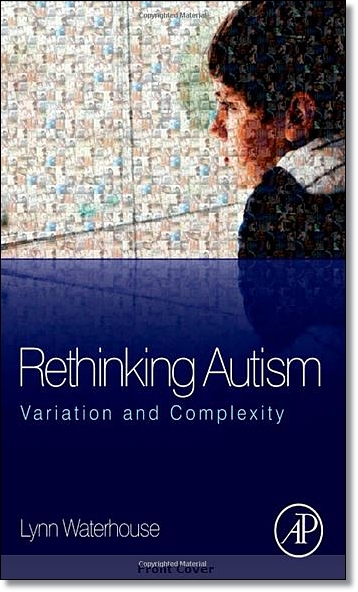
Rethinking Autism Variation and Complexity by Lynn Waterhouse is a recent work which provides a thorough, expert and extremely well researched picture of the variation and complexity of  autism spectrum disorders.

Hopefully the rest of the professional and academic autism community will read Rethinking Autism and come to grips with autism variation, complexity and heterogeneity. The highly influential autism advocacy corporation Autism Speaks has typically done a poor job of representing the heterogeneity of the autism spectrum of disorders. AS has aggressively promoted the careers of John E Robison and Alex Plank two very, very high functioning persons with Aspergers/Autism Spectrum Disorders.  At the same time Autism Speaks has also obscured the existence of the 40% of persons estimated to have autism and an intellectual disability and the large number of persons with autism who also suffer from epileptic seizures.


In what may be a major breakthrough for Autism Speaks, in the post Geraldine Dawson era, and a possible step forward in public understanding of autism disorders a high ranking Autism Speaks official, Michael Rosanoff, Autism Speaks associate director for public health research and scientific review, has acknowledged the heterogeneity of autism spectrum disorders in clear, unambiguous terms, in  a Detroit Free Press article Brain changes of autism may begin in the womb:

"Rather than one disease, autism is now regarded as a collection of conditions with similar traits but different causes, Rosanoff says. People on the autism spectrum are extremely diverse. Some are non-verbal and profoundly disabled; others have successful careers, particularly in science and technology, describing themselves as different, rather than disabled. "Autism is so heterogeneous," Rosanoff says. "We're never going to get to the one cause.""

For anyone else, including other Autism Speaks officials who want to catch up to Mr. Rosanoff in understanding autism disorders, autism researchers and major media columnists interested in a thorough, scholarly view of autism spectrum disorders I strongly recommend Rethinking Autism: Variation and Complexity by Lynn Waterhouse. 

Posted in , , , , , , , , |

Autism`s 40% With Intellectual Disability? Auti$m $peak$ Doesn't See YOU, Doesn't Speak For YOU!


Autism Speaks has done much to create publicity around the word autism, the color blue, puzzle pieces and ... some very talented, high functioning individuals with autism diagnoses like Alex Plank and J. E. Robison.  In terms of its public statements and presentations though it does little to nothing to  raise awareness about one very basic fact: autism has a very close relationship with intellectual disability to the extent that 40% of persons with autism spectrum diagnoses (DSM-IV) also have intellectual disability. 

Prior to the DSM-IV and prior to the addition of PDD-NOS and Aspergers persons with intellectual disability constituted the vast majority of persons with autistic disorder.  Autism Speaks has reluctantly acknowledged that 40% of persons with autism have intellectual disability but does not reflect their existence in their press releases.  Autism Speaks conflicted attitude toward those with autism and intellectual disability was illustrated vividly in the recent Drake and J. Cole lyrics uproar when Autism Speaks defended persons with autism but not those with autism and intellectual disability. Instead of criticizing the rappers for their derogatory reference  to persons as “autistic, retarded." Autism Speaks went further and argued that in fact persons with autism are very successful and talented. No mention was made in the Autism Speaks press release of the 40% of the autism spectrum who are intellectually disabled even though the words "mentally retarded." have been replaced by the words intellectually disabled.  

Autism Speaks chose not to stand up for the intellectually disabled members of the "àutism community" even though they were  expressly  maligned in the original lyrics:


"Lyrics from the recently released song “Jodeci Freestyle” from hip hop artists Drake and J.Cole have many in the autism community up in arms. The song, which was released last month and is now getting airplay, contains the following lyric by J. Cole: “I’m artistic, you n----s is autistic, retarded." 

These lyrics are offensive and perpetuate negative stereotypes. There are many inspiring individuals with autism and other disabilities who have achieved great success across a variety of artforms, including music. We encourage J. Cole to recognize their talents and learn from the positive example they have set for all of us."

This is not the first time Autism Speaks has chosen to ignore the intellectually disabled 40% while promoting the very, very, very high functioning elite members of the autism spectrum like J. E. Robison and Alex Plank.  There is almost never any mention of the intellectually disabled in promotions and news releases by Autism Speaks or on their web site.  I have previously noted that Autism Speaks has only reluctantly acknowledged the existence of intellectual disability on the About Autism section of its web site burying mention of 40% with ID in the middle of the page, book ended by references to those with high IQs and abilities.

In the "rapper incident" AS went further than just ignoring those with autism and intellectual disability.  They implied that persons with autism, all persons with autism, are in fact talented, successful people.  They were ashamed to mention and defend the 40% with autism and Intellectual Disability.  The rappers have offered sincere apologies and taken steps to address the issue by changing the lyrics.  Rapper J.  Cole even acknowledged the existence of those with severe autism and their families.  By their actions Drake and J. Cole have shown themselves to be ahead, light years ahead of Autism Speaks in caring about ALL persons on the autism spectrum including the 40%  intellectually disabled.  

Posted in , , , , , , , |

Severe Autism Breakthrough: J. Cole Offers Sincere Apology And Acknowledges Existence of Severe Autism

Dreamvillain


Rapper J. Cole has offered what appears to this observer to be a very sincere apology, one offered without qualifications and one which actually offers a breakthrough for those who, like my son, suffer from severe autism. Unlike most prominent autism advocates rapper J. Cole actually acknowledged the existence of, and included in his apology, those at the severe end of the autism spectrum.  

Many autism advocacy organizations and "self" advocates routinely denigrate anyone who mentions severe autism disorders. Television series, movies and feel good mainstream media rarely acknowledge the severe, low functioning end of the autism spectrum. Rapper J. Cole's apology, however,  set out on his blog, DREAMVILLAIN, extended to all persons with autism disorders including those with severe autism and their families. 

I hope Autism Speaks, in particular, takes note of Cole's references to those with Aspergers AND those with severe autism and their families. If Rapper J. Cole can acknowledge the existence of severe autism surely Autism Speaks can do the same and start addressing the challenges facing the 40% on the autism spectrum who also suffer from intellectual disability and the many spectrum members who suffer from serious "comorbid" conditions like epileptic seizures. Cole's apology is set out hereafter in full, as stated on his blog, with my underlining added. 

Autism Speaks

Recently there’s been a trend that includes rappers saying something
offensive, only to be attacked for it in the media and pressured to
apologize. I have to be completely honest and say there’s a part of me
that resents that. I view rap similar to how I view comedy. It’s going
to ruffle feathers at times. It’s going to go “too far”. I do not
believe that an apology is needed every time someone is offended,
especially when that apology is really only for the sake of saving an
endorsement or cleaning up bad press.
With that said, this is not the case today. This letter is sincere.
This apology IS necessary.
In a recent verse on the song “Jodeci Freestyle”, I said something
highly offensive to people with Autism. Last week, when I first saw a
comment from someone outraged about the lyric, I realized right away
that what I said was wrong. I was instantly embarrassed that I would
be ignorant enough say something so hurtful. What makes the crime
worse is that I should have known better.
To the entire Autism community who expressed outrage, I’m moved and
inspired by your passion, and I’m amazed at how strong you are as a
unit. I have now read stories online from parents about their
struggles and triumphs with raising an Autistic child and I admire how
incredibly strong you have to be to do so. It’s touching. It also
makes what I said even more embarrassing for me. I feel real shame.
You have every right to be angry.
To anyone suffering from Autism, either mildly or severely, I am
sorry. I’m bound to make mistakes in my life, but in my heart I just
want to spread Love.
I want to educate myself more on Autism, and I’ll gladly own my
mistake and serve as an example to today’s generation that there’s
nothing cool about mean-spirited comments about someone with Autism.
People with this disorder and their loved ones have to go through so
much already, the last thing they need is to hear something as
ignorant as what I said. I understand.
To the parents who are fighting through the frustrations that must
come with raising a child with severe autism, finding strength and
patience that they never knew they had
; to the college student with
Asperger’s Syndrome; to all those overcoming Autism. You deserve
medals, not disrespect. I hope you accept my sincere apology.
Much Love
-Cole
Well said Cole, well done. 

Posted in , , , , |

Sound Advice for Autism Speaks


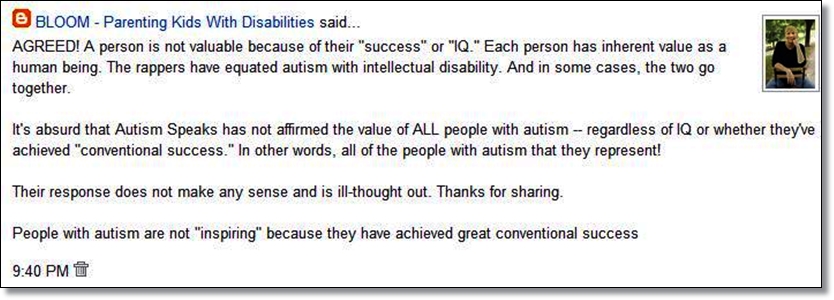
In yesterday's commentary  Autism Speaks Joins Drake And J.Cole In Insulting 40% With Autism AND Intellectual Disability I criticized Autism Speaks for stigmatizing persons with Intellectual Disability, particularly the 40% of persons on the autism spectrum with ID, the 40% that Autism Speaks seldom acknowledges in its promotions and literature.  

I received the comment, posted above, from BLOOM - Parenting Kids With Disabilities editor Louise Kinross that expresses my issue with Autism Speaks' approach to intellectually disabled members of the autism spectrum better than I did. It would do Autism Speaks and the autism community it purports to represent  a great service to give serious consideration to Louise's comment. 

Posted in , , , , |

Autism Speaks Joins Drake And J.Cole In Insulting 40% With Autism AND Intellectual Disability


Autism Speaks has joined rappers Drake and J. Cole in insulting persons with Intellectual Disability particularly the 40% of the autism spectrum with intellectual disability.  The rappers had published song lyrics referring in an insulting manner to persons who are "autistic, retarded".  Autism Speaks did not simply criticize the rappers for denigrating persons who were autistic or intellectually disabled. Autism Speaks criticized the rappers for perpetuating negative stereotypes and for failing to recognized the many persons with autism and "other" disabilities who have enjoyed great success and talents.  

Presumably it would have been OK in the view of Autism Speaks if the rappers had mocked only the 40% with intellectual disabilities or those who were not successful or did not display exceptional talents.   It is not clear to this father of a severely autistic son with profound developmental delays, who lacks an exceptional talent, who Autism Speaks for but it clearly does not speak for my son. 

There are no doubt many in the high functioning end of the autism spectrum community who would  be insulted by the rappers lyrics ... my son who would not understand the lyrics is not one of them. I love my son and I take insult at the smarmy lyrics of Drake and Cole simply because they intended to insult persons like my son who are autistic and/or intellectually disabled not because they failed to recognized the talents and intellects of higher functioning persons with autism disorders. I am also ticked off, but not surprised, by Autism Speaks for essentially endorsing the rappers mocking of intellectually disabled a term which does not even appear in the Autism Speaks criticism.   Nowhere are autism's 40% intellectually disabled more invisible than within the Autism Speaks agenda:

Hip Hop Lyric Insults Autism Community

"Lyrics from the recently released song “Jodeci Freestyle” from hip hop artists Drake and J.Cole have many in the autism community up in arms. The song, which was released last month and is now getting airplay, contains the following lyric by J. Cole: “I’m artistic, you n----s is autistic, retarded." 


These lyrics are offensive and perpetuate negative stereotypes. There are many inspiring individuals with autism and other disabilities who have achieved great success across a variety of artforms, including music. We encourage J. Cole to recognize their talents and learn from the positive example they have set for all of us."

Posted in , , , , |

Mother Of An Autistic Son Asks Autism Speaks for Some Actual Autism Awareness


The following commentary  is from the blog Muslimah Next Door  written by Dishad Ali. It addresses an issue that I have raised several times - the lack of real autism awareness created by autism awareness events. The author's comments at Muslimah Next Door under the title When an Autism Awareness Event is Anything But are followed by a letter from  Harshita Mahajan the mother of a teenage autistic son addressed to Autism Speaks.  I sincerely hope that Autism Speaks takes the mother's concerns, and the contents of her letter, seriously and begins to provide during autism awareness events awareness of the realities of autism disorders including some of the challenges presented by autism mild and severe. 
"We’ve hit the middle of April, and while there was a flurry of focus on autism at the start of the month, it still is very much “Autism Awareness Month.” Awareness events sponsored by local and national organizations continue to occur across the United States, but sometimes I wonder how much real “awareness” is actually happening? How many of these events just serve as fundraisers for the organizations sponsoring it?
Fundraising is not bad, and of course autism organizations must capitalize on the attention garnered in this month. But, if you’re going to frame event as “autism awareness,” then there be some education happening to make people “aware” of what autism is, what it entails, how it can be manifested. (Unless it is a closed event just for the autism community) There better be autism ambassadors at these events making sure things go as smooth as possible for those with autism (and without) who attend said events.
My friend Harshita Mahajan took her autistic teenage son Sahil to an autism awareness event recently sponsored by Autism Speaks, at which her son had a lapse of self-control. What happened after that was upsetting and resulted with Harshita leaving with her son. For this to happen at an autism awareness event – well the irony is not lost on me. Read her story. Share it. Let’s make sure events advertised as being about ”autism awareness” educate people, not just fundraise."
I encourage anyone interested in autism disorders to read the letter by Harshita Mahajan as posted on the Muslimah Next Door blog under the commentary When an Autism Awareness Event is Anything But.

Posted in , , , |

Autism Speaks Reluctantly Confesses: 40% Of Persons On Autism Spectrum Have Intellectual Disability


Intellectual Disability remains the Elephant in the Autism 
Living Room;no one wants to admit it's there or to talk about it

It is politically incorrect in today's autism world to acknowledge the existence of the invisible autistics, the one's unlike Ari Ne'eman, John Elder Robison, Alex Plank and  Michelle Dawson all of who whom have enjoyed great success and demonstrate considerable intelligence and most of whom have never met a television camera or gathering of journalists that offends them. Some of the extremely high functioning superstars of autism "self" advocacy have literally built careers telling the world what it means to be "autistic".   Meanwhile those with intellectual disability who constituted autism's "vast majority" prior to the DSM-IV expansion of the pervasive developmental disorder category to include Aspergers remain invisible and unmentionable in polite, successful autism circles:

"But the autism umbrella has since widened to include milder forms, says Dr. Marshalyn Yeargin-Allsopp, a medical epidemiologist at the CDC. For example, it now includes Asperger syndrome, where the sufferer is socially impaired, but experiences typical language development.

Another difference between past and present autism diagnosis involves the presence of intellectual disabilities
adds Yeargin-AllsoppDuring the 1960s and 1970s, the vast majority of those diagnosed with autism had an intellectual disability but today, only about 40% have one."


Against that background I must give some slight praise to Autism Speaks for daring to mention, albeit hidden deep in  the FAQ section, carefully book ended by reference to autistic savant skills and those with normal to above average intelligence, that, Oh My Gosh,  40% of persons on the autism spectrum have an intellectual disability:

What Does it Mean to Be “On the Spectrum”? 


 Each individual with autism is unique. Many of those on the autism spectrum have exceptional abilities in visual skills, music and academic skills. About 40 percent have intellectual disability (IQ less than 70), and many have normal to above average intelligence. Indeed, many persons on the spectrum take deserved pride in their distinctive abilities and “atypical” ways of viewing the world. Others with autism have significant disability and are unable to live independently.

Autism Speaks, like the APA committee that drafted the DSM5 autism criteria to exclude the most severely intellectually disabled from an autism diagonosis even if they meet all the specific criteria for an autism spectrum disorder, does not wish to openly speak the truth: intellectual disability is not just a co-morbid or coincidental disorder that just happens to be present in the vast majority  of cases of classic autistic disorder. It is for the original vast majority a description of their  developmental deficits, while those with Aspergers do not have intellectual or language deficits most of those with Autistic Disorder do.  The intellectual disability is a feature of their autism disorder whether extremely high functioning Aspergers self advocates, fund raising entities like Autism Speaks or even the APA wish to acknowledge it.  

There is no reason to artificially separate the intellectual disability from the "autism" symptoms.  There is no scientific basis for doing so and it is morally and ethically wrong to do so.   

It is scientifically unsound to hide the reality that intellectual disability is an integral part of autistic disorder.  It is just as immoral and unethical to hide that reality, to pretend that intellectually disabled are not truly autistic as it would be to pretend that persons of different racial, gender characteristics or sexual orientations do not count as full human beings. 

Posted in , , , , , , , |

Wright Is Right: Autism Has Become An Epidemic


Bob Wright co-founder of Autism Speaks testified before ta US National Congress  committee and made a number of important points including what is obvious to those who are actually paying attention to autism realities: autism has become an epidemic.  The usual suspects, those autism researchers who study whatever suits them, whatever narrow issue they find interesting or can build a career around, remain in denial. The deniers have no solid evidence to support their position.  It is really quite simple. They are wrong.  Autism is an epidemic. Wright is right.

Parents and other family members with 24/7 responsibility for caring for the autistic children we love can not ignore autism realities. Many of us can see the autism epidemic and we can not redefine our children's challenges out of existence by amending the DSM every few years. (Yesterday the APA voted to accept the new DSM5 including the New Autism Spectrum Disorder that will expel many with autism and intellectual disability and complete the reshaping of Asperger's as Autism.) We can not pretend autism is not a disorder or that gee whiz autism always existed.  We are not comforted by the idle speculation that all of history's  scientific, literary and artistic geniuses are all examples of "the autism advantage".

We must deal with reality, autism reality, in all its manifestations.  Many  parents, grandparents and other family members caring for autistic loved ones can not and do not ignore the reality that autism numbers are increasing. When Bob Wright addressed a US Congressional committee and spoke about the autism epidemic he spoke a truth that is obvious to many parents, grandparents and family members: there is an autism epidemic. Autism researchers and others who do not see the autism epidemic have simply chosen not to see it. Those who deny the existence of the autism epidemic look only at one of the elephant's toes. They do not step back and see the whole elephant.

Those who deny the autism epidemic, who blame their own periodic diagnostic definition changes, diagnostic substitution, increased awareness and those imaginary autism services that make autism a must have diagnosis see only what they want to see.  They want to see a genetic explanation for autism and they refuse to consider environmental factors.  "It's gotta be genetic" and that means there is no real increase because genes don't change that quickly.

The failed premise on which the deniers excuse their repeated failure to find a gene or genes that truly cause autism symptoms or disorders is that autism is purely genetic and that the air, water, food, we consume, the toxic chemicals used in toys, clothing, jewelry, furniture and injected into pregnant women can not really have any effect on the neurological development of our children.  That reckless assumption is the kool-aid of those who deny the existence of the autism epidemic. Many parents refuse to drink that kool-aid.

The IACC pie chart above shows that genetic autism risk research receives by far the greatest share of autism risk research funding.  "Pure" genetic research receives 63% compared to 5% for environmental risk research funding.  "Epigenetic" autism risk research receives an additional 7% of autism risk research funding for a total of 70% of genetic research compared to 5% for environmental.  Gene-environment interaction research accounts for 25% of autism risk funding.   I am a humble small town lawyer and father of a severely autistic, cognitively challenged 16+ year old son.  I can not possibly be as smart as all those clever autism researchers who manipulate statistical data and call it autism research but those numbers tell me that genetic autism risk research outweighs environmental autism risk research 12 to 1.  The autism research community has produced no substantial results in its genetic autism research despite owning the autism research funding bread basket in recent decades.  No wonder many autism researchers dig in their heels and say there is no autism epidemic. An epidemic requires environmental factors and would push funding toward a more equal balance with more dollars for autism risk factor research funding and fewer dollars for their genetic studies. The negative impact that redistribution could have on their careers is obvious.

A prime example of the career influence and "its gotta be genetic" mandate on the autism research community is the example of Dr. Peter Szatmari's reaction to the CATS, California Autism Twins Study.  Dr. Joachim Hallmayer,  who was involved with the CATS study, indicated that CATS demonstrated the importance of an environmental role in autism causation with both genetic and environmental research playing significant roles.  Prominent genetic autism risk researcher Dr. Peter Szatmari, offered a different interpretation, one that I found bizarre in light of the previously existing autism emphasis on genetics alone as explaining autism:

Dr. Joachim Hallmayer:

"I think we now understand that both genetic and environmental factors have to be taken seriously,” said Dr. Joachim Hallmayer, an associate professor of psychiatry and behavioral sciences at Stanford and the lead author of the new study, which is to be published in the November issue of Archives of General Psychiatry. ....... surprisingly, mathematical modeling suggested that only 38 percent of the cases could be attributed to genetic factors, compared with the 90 percent suggested by previous studies .... And more surprising still, shared environmental factors appeared to be at work in 58 percent of the cases" 

Dr. Peter Szatmari:

This is a very significant study because it confirms that genetic factors are involved in the cause of the disorder but it shifts the focus to the possibility that environmental factors could also be really important."

Dr. Szatmari has it backwards. His quote indicates a desperate effort to continue the funding emphasis on genetic autism research. He clearly reverses the importance of the CATS study by indicating that it confirms a genetic role in autism causation which, to my knowledge, is not in dispute.  In reality the CATS study,  as indicated by its lead author, Dr. Hallmayer, indicates that study points out the importance of environmental factors within the context of a shared gene environment interaction model of autism causation.

The significance of the autism research genetic obsession is substantial.  As long as the cult like belief that autism is 100% genetic persists it is easy to deny the existence of the autism epidemic.  When it is acknowledge that environmental factors are involved simple denial is no longer an option.
Dr. Jon Poling is a neurologist and father of Hannah Poling, an autistic child. He   and his wife, a registered nurse and lawyer, could not be written off as  irrational, hysterical parents when they sought compensation for his child's autism symptoms under the legislated process in the US.   His comments in a March 13, 2009 opinion column of the Atlanta Journal Constitution must be heeded by government decision makers and autism researchers in the US and Canada:


"Fortunately, the ‘better diagnosis’ myth has been soundly debunked. ... only a smaller percentage of this staggering rise can be explained by means other than a true increase.

Because purely genetic diseases do not rise precipitously, the corollary to a true autism increase is clear — genes only load the gun and it is the environment that pulls the trigger. Autism is best redefined as an environmental disease with genetic susceptibilities."

We should be investing our research dollars into discovering environmental factors that we can change, not more poorly targeted genetic studies that offer no hope of early intervention. Pesticides, mercury, aluminum, several drugs, dietary factors, infectious agents and yes — vaccines — are all in the research agenda."

We are long overdue in developing a A Research Strategy to Discover the Environmental Causes of Autism and Neurodevelopmental Disabilities as advocated by Philip J. Landrigan, Luca Lambertini and Linda S. Birnbaum in April 2012.   Such a strategy will require a redressing of the imbalance in genetic and environmental autism risk funding as advocated by Dr. Irva Hertz-Picciotto.  

The denial of an autism epidemic arises directly from, and is supported by, the   "it's gotta be genetic" belief that has dominated autism research and autism risk research funding.  

We are living in an autism epidemic and it is time to find and address the causes of that epidemic.  The time is now! 

Posted in , , , , , , |

More Confirmation of Targeted Exclusion of Intellectually Disabled from DSM5 Autism Spectrum Disorder: But NO ONE CARES


Emily Singer has published an article at SFARI, Proposed guidelines won't miss autism cases, study says, which appears to suggest that persons who would meet DSM-IV PDD-NOS and Asperger's will "only" be reduced by approximately 10% under DSM5 criteria. The focus, as always, is on the HF end of the spectrum with no mention made of the intellectually disabled who will be excluded under the wording of mandatory criterion A of the DSM5. "We didn't see any evidence that there would be dramatically lower diagnosis of people with Asperger's or PDD-NOS," says Lord."

Catherine Lord has previously confessed that the real targets for exclusion from the DSM5's New Autism Spectrum Disorder are the intellectually disabled:

-"Catherine Lord, the director of the Institute for Brain Development at NewYork-Presbyterian Hospital, and a member of the committee overseeing the [DSM-5 autism] revisions, said that the goal was to ensure that autism was not used as a “fallback diagnosis” for children whose primary trait might be, for instance, an intellectual disability or aggression." [Bracketed terms added for context - HLD]

- Dr. Catherine Lord, as reported by NYT reporter, Amy Harmon, A Specialists’ Debate on Autism Has Many Worried Observers, New York Times, January 20, 2012

Persons with ID represented "the vast majority" of persons with autistic disorder according to CDC autism expert Dr. Yeargin-Allsopp. The DSM-IV addition of PDD-NOS and Aspergers reduced that figure to 41-44% according to recent CDC surveys.  The DSM5 exclusion under Criteria A for social communication even where  EVEN if all Critera A categories are otherwise exhibited will result in a further significant reduction in numbers of person with autism and ID. And that is the real aim of the DSM5 as Catherine Lord again confesses as reported in the Singer/SFARI article:

"Lord and her colleagues found that the DSM-5 is as sensitive as the DSM-IV, meaning it accurately identifies those who have autism. The DSM-5 criteria also have better specificity than those in the DSM-IV, meaning they can better distinguish between people who have autism and those who have other developmental disorders, the study found."

As set out above the real targets for exclusion from the autism spectrum under the DSM5 autism do-over are the intellectually disabled who are targeted by the addition of the "not accounted for by general developmental delay" disqualifying criterion in mandatory criterion A. Studies by J Matson have confirmed that substantial numbers, as many as 35.5%, of intellectually disabled who would meet DSM-IV autism criteria, will be excluded under the DSM5 criteria. 

In the DSM5 the evolution of autism into Aspergers continues with the targeting for exclusion of the intellectually disabled. But no one cares. Not Dr. Lord,  not Dr. Geraldine Dawson of Autism Speaks whose organisation has expressed concern over the possible impact of the DSM autism do-over on those at the HF end of the spectrum but not on the intellectually disabled. Not the New York Times and other major media who have worried over the possible HF exclusions.   The exclusion of some HF is possible, the exclusion of many LF intellectually disabled is certain but apparently no one cares about the intellectually disabled and the impact this exclusion will have on them.

Posted in , , , , , , , |

ABA Treatment for Autism: America Leads, Lets Catch Up Canada, Lets Get Moving Again!!


At one time the argument might have been made that Canada led North America in terms of provision of evidence based treatment for autism.  Strong parent advocacy had made gains in encouraging provincial governments in British Columbia, Alberta and New Brunswick to provide Applied Behavior Analysis treatment. Our federal government, however, refused to get involved in any meaningful way and the Harper government played politics with the National Autism Strategy. The pitiful National Autism Symposium was postponed to allow the deck to be stacked with anti-ABA advocates and to weed out ABA advocates including me.  Here in New Brunswick our successful provincial program for early intervention based on the recognized (Eric Larsson, David Celiberti) UNB-CEL Autism Intervention Training program has  been abandoned at both the early intervention and school levels in favor of  in house autism intervention "training". In New Brunswick gains made are being abandoned, in Canada federally they never started.  In the Courts our Supreme Court of Canada, apart from a human rights and statutory analysis,  opined in Auton that ABA was an "emergent" therapy, notwithstanding earlier findings by the US Surgeon General, among other prominent authorities, that ABA effectiveness as an autism treatment was backed by 30 years and hundreds of studies.

Our good neighbors to the south, however, are taking autism disorders more seriously with more states requiring insurance providers to include ABA treatment and a 2012 federal judge ruling ordered that Medicaid cover ABA treatment in Florida.  Now Autism Votes, an Autism Speaks initiative, reports that the US federal government has concluded that ABA is primarily a medical, not just educational, therapy with the result that autistic persons among the 8,000,000 US federal employees will be eligible for ABA treatment under their medical coverage: 

Autism Speaks Hails Landmark Federal Decision Calling Key Autism Therapy a ‘Medical’ Service Eligible for Insurance


NEW YORK, NY -- Autism Speaks hailed today’s announcement by the federal government, the nation’s largest employer, that Applied Behavior Analysis (ABA), the most widely used behavioral intervention used to treat autism, is a “medical” therapy that qualifies for health insurance coverage, rather than an “educational” service.

The decision by the U.S. Office of Personnel Management (OPM) involves health insurance coverage provided to the nation’s eight million federal employees, retirees, and dependents, under the Federal Employees Health Benefits (FEHB) Program. It could have even more far-reaching implications on the health insurance benefits provided all Americans living with autism, as it will be much harder for insurance companies to continue denying coverage for ABA treatment.
“The OPM decision directly contradicts a long-standing insurance industry claim that ABA therapy is not ‘medical,’ but rather ‘educational’ - provided by the schools at taxpayer expense,” said Peter Bell, Autism Speaks executive vice president for programs and services. “Now, tens of thousands of families will have better access to more affordable, critical ABA treatment.” 

The decision was rendered in the form of guidance to insurers who participate in the FEHB Program for policies that will be renewed or issued starting in 2013. The OPM decision does not require the insurers to cover ABA, but rather allows them to offer the coverage as it does many other medical treatments. The guidance reads: “The OPM Benefit Review Panel recently evaluated the status of Applied Behavior Analysis (ABA) for children with autism. Previously, ABA was considered to be an educational intervention and not covered under the FEHB Program. The Panel concluded that there is now sufficient evidence to categorize ABA as medical therapy. Accordingly, plans may propose benefit packages which include ABA.”

Autism Speaks has fought to provide families insurance coverage for ABA therapy through state-regulated plans, self-funded group plans that are regulated under federal law, the FEHB Program, and TRICARE for military families. In each instance, opposition to covering ABA treatment has been based in large part on the claim that ABA is educational, rather than medical."

In Canada our provincial government health care providers defined autism intervention as a social service rather than a medical necessity helping it avoid responsibility for autism coverage in the Courts. Canada still has an autism advocacy movement at work trying to right the Canadian autism ship which has floundered on the rocks of indifference.  Medicare for Autism Now! has been fighting hard to encourage our disinterested federal government to take autism seriously, meet with the provinces and get effective ABA treatment covered for autism under all provincial health care legislation.  

Wake up Canada! We are not falling behind in autism treatment we have already fallen way, way behind.  Get behind Medicare for Autism Now! and provide your support, get involved.  When we wave the Canadian flag this July 1st lets remember our autistic children in need of effective ABA treatment. If our American friends can wake up and address the autism crisis that confronts us all surely we Canadians can do so too,  EH?

Posted in , , , , |

"Thinking" Persons Guide to Autism Issues Proclamation Declaring Autism Speaks Does Not Benefit Autistic People


Some of the people referenced in this post are affiliated with Autism Speaks. TPGA does not consider Autism Speaks an organization that benefits autistic people. -SR


I am not sure what constitutes "Thinking"  at the "Thinking" Persons Guide to Autism. The above quote from "SR", Shannon Des Roches Rosa, precedes a blog comment by Carol Greenburg, a TPGA sponsored blogger at the recent IMFAR 2012 conference in Toronto. I attended IMFAR courtesy of Autism Speaks and found the conference to be an amazing experience. (Although attending courtesy of Autism Speaks my attendance still cost me considerably as I lost 3 days out of my legal practice and time I could have spent with my son Conor). 


I am not totally surprised that SR would make a statement of that nature about Autism Speaks. This is after all the same individual who used tragedy to promote TPGA ideology and products: 


 When I hear about yet another dangerously misinformed autism parent killing their child because of  autism fears, I literally fall to my knees with grief. What kind of world do we live in, if people can't bear. ........ I also blame autism organizations and websites like Age of Autism, Adventures in Autism, AnneDachel, and SafeMinds, which have made unilateral demonization of autism their mission; which do no outreach whatsoever based on building positive supports and communities; and which use calculated cult-like "us or them" mindsets, attack dog techniques, misinformation, and censorship practices to keep their almost exclusively autism parent and grandparent faithfuls' righteous indignation and self-pity at a roiling boil.


It doesn't matter how much you love someone with autism -- if you continuously and publicly declare them damaged goods, you are hurting them. And their peers. And telling everyone else it is acceptable to hurt Autistics. ........this latest tragedy makes me frantic to get our TPGA book out (I'm marking up the proof right now, if there are no more hiccups with the publication process and thanks to the superhero manuscript powers of Jen Myers, it should be available in one week)."


I notice that Autism Speaks wasn't mentioned on SR's "blame" list when she wrote the above comment in response to the tragedy of a mother taking her autistic child's life. Prosecutor's in that case declined to prosecute the woman because they doubted they could prove her sanity at the time she killed her child.  But that didn't stop the self referenced "squidalicious" Shannon DRR from launching her bizarre rant against parents and others who view their child's autism disorder as a ......... disorder.

Autism Speaks deserves to be criticized, like everyone else, on occasion. My oldest non-autistic son finds ample, and I mean ample, reason to criticize me and I actually get a kick out of it when he does.  As the father of a severely autistic son with profound developmental delays I am not sure at times whether all those "thinkers" at the TPGA actually realize that, notwithstanding all their feel good buzzing about autism as an alternative way of thinking etc.,  autism is still a ..... disorder.   I am a bit surprised that SR would identify Autism Speaks as one of the forces of evil and I am not sure why but I assume it is because AS helps fund cause oriented research which may some day result in treatments and cures for autism disorders.

My own frustrations with Autism Speaks arise from their attempts to be all things to all people and in the process downplaying some of the harsher realities of those most severely affected by autism disorders.   In particular I believe that Autism Speaks glosses over the strong connections between Autistic Disorder and intellectual disability.   Autism Speaks has, however, been a key factor in the research area in particular; both genetics and environmental autism research, although I would like to see more emphasis on the environmental research. While I disagree with some of their decisions and directions overall I believe Autism Speaks is a positive force that does benefit autistic people, particularly in raising funds for autism research. Of course as a parent of a son with severe challenges arising from his autistic disorder, and as an unthinking person, my opinion probably doesn't count for much as a guide to autism issues.


I guess it is just par for the course that if you try to please everyone you risk pleasing no one and certainly not someone who identifies so many parents and parent driven organizations as "forces of evil".    I will have to start reading TPGA more closely now, not in hopes of learning anything constructive about autism disorders, but for the amusement value of seeing from day to day who SR and the TPGA have proclaimed to be not acting for the benefit of autistic people.   

Posted in , , , , , , , |

Autism Reality NB at IMFAR 2012 in Toronto, Canada


I am off tomorrow morning, very early tomorrow morning, for the IMFAR 2012 convention in Toronto.  I am very excited to be attending and blogging courtesy of Autism Speaks, Autism Speaks Canada, Dana Marnane and Suzanne Lanthier.  It was a tough day today though. Conor knows Dad won't be home for a few days and he has been a bit agitated.  This afternoon I received a call from the good people at the Leo Hayes High School that Conor was not having a good afternoon. They thought it better that he stay at school until his regular departure time though and I agreed.  When I picked him up I was informed that Conor had in fact calmed down and the rest of the afternoon had gone well.  Conor will miss his old Dad until I return Saturday night.  I might react differently but I will be missing him too.

It is worth it though to attend IMFAR with the annual concentration of autism research and knowledge being hosted in Canada. I am looking forward to blogging about IMFAR from the perspective of a father of a 16 year old son severely affected by his Autistic Disorder.  I underlined Disorder intentionally.  Autism for me is not a culture or a way of life. It is not just a different way of thinking.  It is a serious disorder that restricts my son's life, my son that I love dearly.  I want to attend IMFAR and learn  as much as possible and, hopefully, convey what I have learned, filtered through the perspective I have provided at Facing Autism in New Brunswick for 6 years. It is the perspective of a realistic, caring father who refuses to drink the "autism is a blessing" feel good Kool-Aid of the Neurodiversity advocates who insist on obliterating from public awareness the harsh realities inflicted on so many, including my son, who suffer from autism disorders. 

I hope the IMFAR convention brings news of real progress in autism research.  Although I am a realist I do not give up hope, hope based in solid research.  

I thank Autism Speaks for this opportunity.

Posted in , , , , |

Canada's Autism Epidemic? To Start With We Have to Use American Numbers 1in 88 Children, 1 in 54 Boys


Canada Flag Photo by Harold L Doherty

The CDC in the US has released new numbers on the autism epidemic in the US.  It now estimates that 1in 88 children (1 in 54 boys) have an autism disorder.  There are no known, reliable estimates available for Canada which has not updated its autism estimates in several years.  The Harper government has not taken Canada's national autism crisis seriously preferring to hide behind constitutional walls and leave the availability of treatment to an autistic child to depend on which province his/her parents live in.  

A National Autism Symposium was cancelled once the Harper government became aware that serous autism advocates were planning to participate.  The symposium was rescheduled and the resulting symposium was a sham. Speakers and so called  "community representatives" were chosen who would not take an aggressive advocacy position on any autism issues.  

The speakers list even included persistent anti-ABA activist Dr. Laurent Mottron who believes that the idea of curing autism is nonsense.  Mottron's mentor and fellow anti-ABA, anti-autism cure activist Michelle Dawson was also in attendance. Causes of autism stressed the genetic bases of autism with no attention to possible environmental causes or triggers.  The prevalance rate of 1 in 165 advanced by Dr. Eric Fombonne at that 2006 symposium is still the only figure recognized by the Harper government and by the Autism Society Canada

With the release of the United States CDC estimate of 1 in 88 Autism Speaks has called for a serious response to the autism epidemic:


Autism Speaks called for the development of a national autism action plan that should include, among other elements:

  • Increased funding for basic science uncovering the genetic underpinnings of autism;
  • Increased funding for environmental research detecting the causes of autism;
  • Accelerated funding and development of effective medicines and treatments;
  • Commitment to a strategy where all children with autism from every background are diagnosed no later than18 months of age;
  • Commitment to a National Training Corps to recruit more therapists and service providers, as well as specially trained teachers and teacher assistants;
  • A strategy to address the growing needs of adults with autism, specifically around continuing education, employment, housing/residential living and community integration.
The Autism Speaks recommendations are solid and, hopefully, will be adopted in the United States.  In Canada we can not realistically expect a serious response along those lines from our current Federal government.  That has been clearly demonstrated over the past several years of Harper Conservative rule.

In terms of the prevalence rate though it is absurd to rely  on the outdated figure of 1 in 165.   In the absence of any credible, current estimates from Canadian government institutions or from federal autism advocacy groups, the US figure of 1in 88 should be taken as the best available estimate of Canada's autism rates. 

We must also continue the push for national Medicare coverage of effective ABA autism treatment, for continued, real autism research of causes and cures, and for the beginnings of a plan for adult autism employment opportunities and adult residential care and treatment facilities.  

The US has stepped up to the plate, again, in offering meaningful, honest information about the autism epidemic.  Canada has long suffered from a lack of will that has allowed our autism epidemic to become a national autism crisis.   We must begin now working toward the day when a new national government is elected that will take our autism crisis seriously. 

In the meantime we should abandon the ridiculously outdated autism estimate of 1 in 165 and use the American estimates: 1 in 88 children, 1 in 54 boys. 

Posted in , , , , , , , |

What Does Autism Awareness Mean As The Great DSM-5 Autism Do-Over Approaches?


What exactly is Autism Awareness and what does it accomplish?

Can anyone, Autism Speaks, or any other autism organization, say with a straight face that they are promoting autism awareness when the official criteria for determining what autism is, or is not, changes every 15-20 years?  Can anyone say what autism is when the vast majority (CDC expert Dr. Marshalynn Yeargin-Allsopp) of those with autistic disorder, those with intellectual disabilities, are rendered a minority, albeit a large minority at 41-44% (CDC surveys) , with the publication of the DSM-IV and when that large minority are removed from the autism "spectrum" entirely with the publication of the DSM-5?

Can anyone pretend to be talking about the same autism when some are talking about severely impaired and challenged children and adults who lack any significant communication skills, suffer epileptic seizures and engage in dangerous Self Injurious Behavior while others, especially mainstream media like the NYT,  bemoan the challenges faced by very shy high functioning persons who function well in rock bands, businesses and quasi-governmental organizations but heaven forbid find, not unlike much of humanity, that personal intimacy with a person to whom one is attracted can be an awkward, learning experience during adolescence?

Can anyone stand up in good faith in this day and age and say that autism is an entirely genetic disorder when in fact not all identical twins both have autism when one does? Or when researchers find multitudes of genetic bases for autism but no single genetic characteristic of autism? Even after the overwhelming majority of autism research dollars have been funneled for years into a bottomless pit of genetic autism research?

And how about the French psychoanalysts who in 2011-2012 are promoting nonsensical, non evidence based, non reality based autism causation theories, including the "refrigerator mothers" theory of autism causation,  a dangerous harmful work of fiction that never did have an evidence basis? And they have the unmitigated audacity to sue Sophie Robert for exposing their incompetent, archaic nonsense to the world?


Unfortunately the gross autism incompetence of many in the French psychoanalytic profession is about the only thing that remains clear in the world of autism awareness. The very definition of autism has now become contentious. The impact of new diagnostic definitions on epidemiological based autism research can only be imagined but, if past is prologue, will not be helpful in increasing our knowledge of autism causes. 


I do not mean to discourage anyone from engaging in raising autism awareness.  But in this time of the great DSM-5 Autism Do-Over please be clear about what you mean when you say ... autism. 

Posted in , , , , , , , |

2011 Autism Research Game Changer: California Autism Twins Study (CATS) And Gene Environment Interaction

Joachim Hallmayer MD, Stanford University
Following is the press release I received setting out what Autism Speaks considers to be the top 10 autism research achievements of 2011.  Personally I do not think every one of these projects should be on a list of top 10 autism research achievements but this is the Autism Speaks list and I reprint it in its entirety here without any editing by this humble autism dad.  I have added some bold highlighting to emphasize what I feel is truly the most significant achievement the California Autism Twins Study (CATS) ... a large study providing further confirmation that autism causation results from gene environment interaction.  

As the Autism Speaks press release indicates the CATS study is a game changer in our common understanding of what causes autism.  This study has further hastened the demise of the  "it's gotta be genetic" mindset, the belief that autism is an entirely genetic disorder, that has dominated public understanding of autism causes, dominated autism research funding and hindered discovery of environmental, particularly prenatal environmental triggers of autism disorders.

The "it's gotta be genetic" mindset will still live on in the largely autism ignorant, advertising revenue dependent,  major mainstream media institutions in LA, New York and Toronto  but in the informed autism world it is being replaced by the gene environment autism research paradigm. 


AUTISM SPEAKS TOP 10 AUTISM RESEARCH ACHIEVEMENTS OF 2011

Leading Autism Advocacy Organization Documents Progress to Discover Causes and Treatments for Autism Spectrum Disorders

NEW YORK, N.Y. (December 20, 2011¬) – Autism Speaks, the world's largest autism science and advocacy organization, has released its annual list of the 10 most significant science achievements to have impacted autism during the previous year. Every year, Autism Speaks documents the progress made toward its mission to discover the causes and treatment for autism spectrum disorders (ASD), and identifies the Top 10 autism Research Achievements of the year. Autism Speaks’ Top Ten list includes discoveries on how frequently autism recurs in families and the extent to which “environmental,” or non-genetic, influences, increase the risk of autism in those who are genetically predisposed to this developmental disorder. These important results continue to shape the future of autism research for 2012 and beyond.

“Not only has the research community continued to make significant progress towards effective treatments, 2011 offered some game-changing discoveries which help us understand underlying causes of ASD,” explained Autism Speaks Chief Science Officer Geraldine Dawson, Ph.D. “Some of these discoveries will have direct and immediate impact on quality of life of people with autism.”

The 2011 list reflects the exponential rate of discovery in autism research, supported by the joint commitment of government health agencies and private organizations such as Autism Speaks in supporting this vital work.

“The recent reauthorization of the Combating Autism Act was critical to ensuring a continued federal commitment to supporting autism research and services that will improve our understanding of autism and help people with autism lead productive and fulfilling lives,” stated Autism Speaks President Mark Roithmayr. “I applaud the thousands of families nationwide who joined Autism Speaks Walks as well as our many corporate sponsors whose support and funding are enabling us to move forward,” Roithmayr added. “Working together – families, scientists, professionals, government officials – we are making progress through science and advocacy.”

With input from Autism Speaks' Scientific Advisory Committee (SAC), Autism Speaks science staff culled through thousands of publications to arrive at these choices. “These outstanding scientific advances are changing the way we think about autism and its causes,” said SAC member Gary Goldstein, M.D., president and chief executive officer of the Kennedy Krieger Institute.  “From the game-changing twin study to the emerging clues on environmental risk factors, these studies highlight the important role of gene-environmental interactions in autism.” 

This year’s highlights also reflect discoveries which advance translational research – the science of designing drugs to address core symptoms of autism. Research in 2011 also delivered evidence that may yield immediate benefits, that adequate folic acid around the time of conception may lower autism risk, and the validation of a method for screening at one year that may enable earlier intervention to improve children’s outcomes. An international study from South Korea not only found a much higher prevalence of ASD in schoolchildren by using a community screening method – 1 in 38 –  – but provides evidence that community screening elsewhere may yield much higher prevalence rates than would be found in standard surveys of medical records.

It’s More than Just Genes  Early environment shared by twins contributes to autism risk

For years, scientists have been following twins to help determine the contributions of genetic and non-genetic factors in the development of autism. But until this year, only three small autism twin studies, with just 66 twin pairs total, had been completed. Together they suggested that autism’s development stemmed almost entirely from inherited genes.

When one identical twin developed an autism spectrum disorder (ASD), these studies suggested, the chances were 9 out of 10 that the other twin would do so as well. Identical twins (who arise from the same fertilized egg) share 100 percent of their genes. By contrast, the studies found little or no autism overlap, or “concordance,” between fraternal twins. Fraternal twins arise from different eggs fertilized at the same time and, as a consequence, share about 50 percent of their genes.

Then came the game changer: In July we learned the results of the largest study to directly assess twins with autism (192 twin pairs). It revealed a significantly lower autism concordance between identical twins – just 70 percent. Even more surprising, the researchers discovered a much higher than expected overlap between fraternal twins – around 35 percent. That’s considerably more than the overlap seen among different-age siblings, which numerous studies have shown to be lower than 15 percent.

The conclusion: In the presence of an underlying genetic predisposition, the environment shared by twins – but not different age siblings – appears to significantly affect the risk that a baby will develop autism. In particular, this suggests that autism’s non-genetic, or “environmental,” risk factors involve the environment of the womb – from conception through birth. Further research is needed to pinpoint the nature of these influences and how they affect early brain development.

The large sample size of the study, led by Joachim Hallmayer, M.D., of Stanford University School of Medicine, was made possible by Autism Speaks Autism Genetic Resource Exchange (AGRE) and its volunteer families. The study was also co-funded by Autism Speaks and the National Institute of Mental Health.


Hallmayer J, Cleveland S, Torres A, et al. Genetic heritability and shared environmental factors among twin pairs with autism. Arch Gen Psychiatry. 2011;68(11):1095-102 [Jul 4 Epub ahead of print].


Population Screening Reveals Dramatically Higher Autism RatesSouth Korean study suggests many missed diagnoses in general population

A South Korean study that directly screened schoolchildren for autism spectrum disorder (ASD) revealed a prevalence of 1 in 38 children, or 2.6 percent. Two-thirds of the affected children were in mainstream classrooms, previously undiagnosed and receiving no services.

The finding, published in the American Journal of Psychiatry, raises the possibility that the current CDC estimate of autism prevalence in the United States (1 in 110 children, or about 1 percent) may be a considerable underestimate. The U.S. estimate is based on reviews of medical records, rather than the Korean study’s method of direct screening and case confirmation of children in the general community.

The South Korean study covered a wide-ranging population and used gold standard screening and diagnostic tools. Led by Young Shin Kim, M.D., Ph.D., of Yale School of Medicine, it was the first to attempt a rigorous estimate of autism prevalence in the general South Korean population and among the first such prevalence survey outside North America and Europe. It included about 55,000 schoolchildren between the ages of 7 and 12 living in a residential community near the capital city of Seoul. The researchers first screened for autism using parent and teacher questionnaires, then used standardized diagnostic methods to evaluate the children who screened positive.

The findings stress the need for improved and wider autism screening among the general population, the researchers concluded, especially among younger age groups, as early diagnosis and intervention have been shown to improve outcomes. Goyang City, where the study was conducted, now offers autism assessment and intervention services for all children entering first grade.

The study was funded in part by Autism Speaks, which is now working with the CDC to implement a study of community screening in the United States. Even at the current estimate of ASD affecting 1 in 110 US children, more children will be diagnosed with autism in the coming year than with childhood cancer, juvenile diabetes and pediatric AIDS combined.

Kim YS, Leventhal BL, Koh YJ, et al. Prevalence of autism spectrum disorders in a total population sample. Am J Psychiatry. 2011 Sep;168(9):904-12.


Baby Siblings at RiskAutism recurs in families more often than previously thought; underscores importance of early screening

Many parents of children with autism want to know the likelihood of having another child on the spectrum. Knowing that younger siblings are at high risk can promote earlier screening, diagnosis and therapy, which may improve outcomes.

This year brought clearer guidance with the largest study of infants with one or more older siblings on the autism spectrum. It found that these younger siblings have close to a 1 in 5 chance (20 percent) of developing an autism spectrum disorder (ASD). This is considerably higher than previous estimates of 3 percent to 10 percent, based on much smaller studies that used various methods of ASD diagnosis. 

The researchers also found a higher rate of autism among baby brothers (about 1 in 4, or 25 percent) than among baby sisters (about 1 in 9, or 11 percent). For infants with more than one sibling on the autism spectrum, the risk of developing ASD was even higher – about 1 in 3.

The study, led by Sally Ozonoff, Ph.D., University of California, Davis, MIND Institute, assessed 664 infants, all of whom had at least one older sibling with a verified diagnosis of ASD. They didnot find a link between autism risk and the severity of symptoms in the older sibling. Nor did they find an effect on risk from other family characteristics such as parental age or education, ethnicity or birth order, or an older sibling’s gender or IQ.

The researchers enrolled infants very early (two-thirds of them before 6 months) before symptoms of autism become obvious. The clinicians then followed the babies through 36 months of age. They used gold standard diagnostic methods and comprehensive assessments performed by expert clinicians. 

The findings highlight the need for close monitoring and screening of infants with an older sibling on the autism spectrum, Ozonoff says. Identifying early signs of autism can help clinicians and families take advantage of intervention strategies that can improve outcomes.

The study’s researchers are members of Autism Speaks Baby Siblings Research Consortium, an international network that coordinates studies and pools data from affected families in 21 sites in the U.S., Canada, Israel and the UK. Autism Speaks also funded the study’s cross-site analyses through a grant to co-author Gregory S. Young Ph.D., also of the University of California, Davis.

Ozonoff S, Young GS, Carter A, et al. Recurrence Risk for Autism Spectrum Disorders: A Baby Siblings Research Consortium Study.Pediatrics. 2011; 128 (3) e488-95


De Novo Genetic Changes Provide New Clues for Autism
Four studies show spontaneous mutations in DNA may contribute substantially to autism occurrence

This year, four separate studies shed new light and confirmed earlier findings that in some – perhaps many – cases, genetic mutations associated with autism arise in an egg or sperm or very early in embryonic development. As such, they are not present in the genetic makeup of either parent. Together, the four studies identify hundreds of places in the human genome where spontaneous, or “de novo,” mutations could increase the risk of ASD, possibly by altering early brain development.

Though rare, de novo mutations may contribute to the development of autism in a substantial number of families with just one child on the spectrum, the researchers agreed. Some went further, noting that de novo mutations might explain why advanced parental age at the time of conception appears to increase the risk that a child will develop an autism spectrum disorder (ASD). Other studies have suggested that de novo genetic mutations in eggs and sperm become more common with age.

In addition to emphasizing the diversity of genetic contributions to ASD, these studies set the groundwork for finding new candidate genes and gene networks and for the potential development of treatments specific to certain subtypes of autism.

In years past, most autism gene research focused on inherited mutations – present in one or both parents. Increasingly, however, researchers are looking at de novo variations in genes involved in the formation and function of brain cell networks. The four new studies strongly suggest that this new focus is the right direction and offer further clues on the particular areas of the genome that should be targeted by future investigation. The findings were made possible, in part, by technological advances that enabled a shift from looking at large mutations to very small DNA changes.

The three largest studies, published simultaneously in the journal Neuron, analyzed DNA samples from children and parents in the Simons Simplex Collection, a newly assembled repository of over 1,000 U.S. and Canadian families with only one child on the autism spectrum. Using DNA chip, or microarray, technology, the researchers scanned for genetic mutations known as copy number variants (CNVs). CNVs can range from tiny deletions in the genetic code to extra copies of a large DNA sequence.

Among other findings, their results confirmed previous smaller studies that found higher rates of spontaneous CNVs in children with ASD than in their non-affected siblings. The researchers also found that many of these non-inherited mutations affect genes or gene networks involved in brain development and have been implicated in past studies of autism and other mental disorders.

For example, they found a strong link between autism and CNVs in a region of the genome associated with Williams-Beuren syndrome, a developmental disorder marked by extreme sociability. While people with Williams-Buren syndrome are missing copies of DNA in this region, some people with autism have extra copies.

Overall, the researchers estimate there may be several hundred locations on the human genome where de novo mutations could increase the risk of ASD, further highlighting the complexity and variety of autism’s causes.

The fourth study looked for spontaneous mutations in 20 people with autism. This study likewise used DNA from the Simons Simplex Collection, but rather than test broadly for CNVs, the researchers used a genetic sequencing technology that targets only the protein-coding parts of the genome. The researchers found four spontaneous gene mutations that likely play a causal role in the development of autism. The researchers also noted that the four participants who carried these genetic mutations had particularly severe core symptoms of autism – suggesting that these particular genes warrant further investigation and may be associated with promising treatment targets.

Together, the four studies are the first set of experiments to offer a detailed genetic analysis of the Simons Simplex Collection, one of the largest databases focusing on families with only one child on the autism spectrum. This collection uniquely complements other large autism databases such as Autism Speaks’ Autism Genetic Resource Exchange (AGRE), which focuses on families with more than one child on the spectrum.


Levy D, Ronemus M, Yamrom B, et al. Rare de novo and transmitted copy-number variation in autistic spectrum disorders. Neuron. 2011 Jun 9;70(5):886-97.

O'Roak BJ, Deriziotis P, Lee C, et al. Exome sequencing in sporadic autism spectrum disorders identified severe de novo mutations. Nat Genet. 2011 Jun;43(6):585-9. [Epub 2011 May 15.]


Different Forms of Autism Share Striking Brain Similarities
Atypical patterns of brain gene expression appear to be shared by those across the autism spectrum

As its name suggests, autism spectrum disorder (ASD) is known for its broad range, or spectrum, of outcomes – from profoundly disabled to highly but “differently” functional. Recent years have likewise revealed a diversity of genes that predispose to the development of ASD.

But this year, scientists discovered a remarkable consistency in the molecular changes occurring in the brains of those with ASD, across a range of autism subtypes. The study found two interconnected gene networks abnormally expressed in the brains of affected persons. The results suggest that diverse types of autism may share a similar biological basis.

Published in Nature, the study analyzed postmortem brain tissue donated to Autism Speaks Autism Tissue Program and was led by neurologist-geneticist Daniel Geschwind, M.D., Ph.D., of the University of California, Los Angeles, and Irina Voineagu, now at the Riken Brain Science Institute in Japan.

The team discovered that, within brains affected by autism, genes involved in cell function tended to be expressed at abnormally low levels, while genes associated with the generation of certain immune cells were expressed at higher than normal levels. Many of these genes are first turned on during embryonic development, they noted, suggesting that the abnormal development of brains affected by autism may begin very early.

In addition, the researchers looked closely at gene expression in the frontal cortex, the part of the brain that controls higher-level thinking, and in the temporal cortex, which controls sensory integration. In brains not affected by autism, the researchers found stark difference in gene expression between the two regions – as would be expected by their different functions. By contrast, these differences in frontal versus temporal lobe gene expression all but disappeared in those affected by autism. The results suggest a blurring of key differences during prenatal brain development. Such findings offer clues to both the causes of autism and guidance for developing medicines that might target autism’s disabling symptoms.

Voineagu I, Wang X, Johnston P, et al. Transcriptomic analysis of autistic brain reveals convergent molecular pathology. Nature. 2011 May 25;474(7351):380-4.


Prenatal Vitamins Before and After Conception May Decrease Autism Risk Study bolsters idea that low folic acid may increase risk in those with genetic vulnerabilities

This year brought evidence that taking prenatal vitamins during the months before and after conception may lower the risk of having a child with autism spectrum disorder (ASD) – at least if the mother or child carries certain genes that increase susceptibility to autism. The study appeared in the July issue of the journal Epidemiology.

The findings are the first to suggest a practical step women can take to reduce the risk of autism in their children. However, the results were based on interviews with fewer than 500 women and, so, need to be confirmed by the outcome of a larger study.

The study, led by Rebecca J. Schmidt, Ph.D., at University of California, Davis, is part of the larger CHARGE (Childhood Autism Risks from Genetics and the Environment) project, which continues to enroll families – both those affected by autism and those that are not. The aim of the project is to increase understanding of the causes and contributing factors that lead to ASD.
Schmidt and her colleagues based their findings on 288 children with autism and 278 children without autism, all between ages 2 to 5. After confirming autism diagnoses, they interviewed the mothers about their vitamin intake (prenatal vitamins, multivitamins, other supplements and fortified cereals) before conception, during pregnancy and while breast-feeding. The mothers who took prenatal vitamins the three months before conception and at least one month after conception were, on average, about half as likely to have a child with autism compared to mothers who did not take prenatal vitamins during this period.

Taking standard multivitamins or eating vitamin-fortified cereals did not affect autism risk. Prenatal vitamins typically contain more iron, folic acid and other B vitamins than do standard multivitamins. For years, physicians have encouraged women to take prenatal vitamins with folic acid because its use during early pregnancy reduces the risk that a baby will be born with neural tube defects, another disorder of brain development.

The researchers also analyzed DNA of the mothers and children. Women who had either one of two gene variants associated with folate regulation had double to five times the risk of having a child with autism – but only if the mother did not take prenatal vitamins around the time of conception. Children who had one of these gene variants had seven times the normal risk of developing autism if the mother did not take prenatal vitamins around conception, but just two times the normal risk if she did take them.

A deeper understanding of these gene-environment interactions may lead to improved methods for the prevention and/or treatment of autism, the researchers note. They also call for more research on the effect of other aspects of maternal nutrition and other potential environmental risk factors on crucial periods of prenatal brain development.

The ongoing CHARGE study receives funding from the National Institute of Environmental Health Sciences, the U.S. Environmental Protection Agency, UC-Davis’s MIND Institute and Autism Speaks.

Schmidt RJ, Hansen RL, Hartiala J, et al. Prenatal vitamins, one-carbon metabolism gene variants, and risk for autism. Epidemiology. July 2011;22(4):476-85.


Gene Knockout Mouse May Offer Leap Forward in Autism Animal ModelsNew mouse model exhibits all core autism traits; may offer advantages for testing helpful medicines

This September, scientists at University of California, Los Angeles debuted a new mouse that may represent a more useful animal model for studying autism spectrum disorder (ASD) and testing potential treatments. The mouse shows more behavioral and biological similarities to people with ASD than do most previous mouse models. It also responds to a drug (risperidone) already approved for treating some symptoms of ASD. This suggests that the mice may be particularly suited for testing promising new medicines aimed at relieving autism’s most disabling symptoms.

The strain, first created in 2003, lacks a gene dubbed CNTNAP2, or “cat nap two.” The gene plays a role in brain development. In people, rare inherited mutations in CNTNAP2 can cause a genetic syndrome known as cortical dysplasia-focal epilepsy, whose symptoms can include seizures, loss of language and hyperactivity. Nearly two-thirds of those affected by this rare disorder are also diagnosed with ASD. Daniel Geschwind, M.D., Ph.D., and colleagues at UCLA crossed this mouse strain with another known for its easily observed repertoire of behaviors. He then tested the new hybrids for autism-like traits.

For years, scientists have been genetically engineering mouse models of autism by deleting, or “knocking out,” the mouse versions of genes associated with autism in humans. While most previous mouse models showed only one or two core symptoms of autism, the new cat-nap model shows all three: hampered communication difficulties, social challenges and repetitive behaviors. The mice groom themselves excessively, have difficulty adapting to new situations and also vocalize and play less than do typical mice. In addition, brain studies reveal that the mice exhibit atypical patterns of brain activity and connectivity that are similar to those seen in many people with ASD.

As mentioned, the researchers gave their knockout mice risperidone. The drug is FDA approved to treat ASD-associated “irritability,” which can be accompanied by self-injury, tantrums and aggression. In the mice, the drug significantly reduced repetitive behaviors.

Penagarikano O, Abrahams BS,Herman EI, et al. Absence of CNTNAP2 Leads to Epilepsy, Neuronal Migration Abnormalities, and Core Autism-Related Deficits Cell. 2011 Sept 30 ;147:235–46.


Tweaking Electrical Activity in the Brain Impairs and Restores Mouse Social Behaviors
Researchers pioneer technique to test how changes in brain activity may produce autism symptoms

Researchers altered the social behavior of mice by using light to manipulate electrical activity in a brain region involved in learning and socializing. The study, published this fall in Nature, bolsters the theory that autism may stem from an imbalance in the natural signals that excite or dampen activity within the brain. The study also offers a new approach to creating animal models of autism – crucial for testing promising medicines that might relieve disabling symptoms.

Using a technique he pioneered and dubbed “optogenetics,” Stanford University psychiatrist Karl Deisseroth, M.D., Ph.D., and his colleagues engineered mice to produce light-sensitive proteins in the prefrontal cortex – a region involved in learning and social behavior. In a typical brain, some cells send signals that excite brain activity while other cells send signals that quiet it. In the optogenetic mice, excitatory brain cells respond to blue light and inhibitory brain cells respond to yellow light.

As a result, the researchers could dial up or dial down the level of activity in a mouse’s prefrontal cortex with pulses of light sent through a fiber optic cable implanted in its brain. The light’s effect lasted up to a half hour, enabling the researchers to remove the visible portion of the fiber optic implant and observe how the mice interacted with new mice or objects placed in their enclosures.

When the mice were exposed to blue light alone, they abruptly lost interest in socializing with new mice. By contrast, typical mice readily approach and sniff newcomers. However, the blue-light stimulated mice did not display other deficits such as difficulty adjusting to new objects placed in their cages.

When both excitatory and inhibitory cells were turned on simultaneously (by exposure to blue andyellow light), the mice resumed typical social behaviors.

The findings support a theory that autism stems from a dysregulation of normal brain signaling. Other evidence supporting this idea includes the fact that about one-third of those with autism also suffer seizures, a result of excessive electrical activity in the brain. In addition, several of the altered genes associated with autism play a role in brain signaling. Also, brain imaging studies reveal that some people affected by autism show higher than normal activity in brain regions associated with social behavior.

This latest experimental evidence further suggests that restoring balance to brain activity may be a way to relieve some of autism’s core symptoms. It also provides groundwork for future research investigating the role that specific brain circuits play in autism. Deisseroth and his colleagues are already developing new mouse models that will allow scientists to manipulate the activity of other brain regions and circuits, promising a more precise picture of how brain signaling problems might give rise to autism’s core symptoms.

Yizhar O, Fenno LE, Prigge M, et al. Neocortical excitation/inhibition balance in information processing and social dysfunction. Nature. 2011 Jul 27;477(7363):171-8.


More Evidence Linking Immune System to Some Forms of Autism
Children with regressive forms of autism show greatest signs of ongoing inflammation

In January, researchers at the University of California, Davis, reported evidence that many children with autism spectrum disorder (ASD) have signs of ongoing inflammation. They found levels of inflammatory markers called cytokines to be higher in children with autism than in those who did not have the disorder. Further analysis showed that the increased levels of cytokines occurred primarily in children who had a regressive form of autism. Regression refers to a loss of developmental skills such as language and sociability after a period of seemingly normal early development.

In addition, the investigators found that impairment associated with autism increased with elevated cytokine levels. The findings suggest that ongoing inflammation may be linked to some forms of autism and autism-linked disabilities. The researchers called for more study on the implications for diagnosis and treatment of autism’s core symptoms.

The research team, led by immunologist Paul Ashwood, Ph.D., analyzed cytokine levels in blood samples from 223 children ages 2 to 5. Of these, 97 had a confirmed ASD diagnosis, 39 had developmental disorders other than autism, and 87 were typically developing children.

Using blood samples, the researchers measured levels of twelve different cytokines – immune-signaling molecules associated with inflammation. Levels of four of the twelve were significantly higher for children with autism than for children with typical development. Cytokine levels were generally highest in children with regressive forms of autism compared to those with non-regressive forms. The researchers considered a child’s autism “non-regressive” if that child had shown signs of autism from infancy.

Past studies have likewise found evidence that immune system abnormalities are more common in children with ASD than in typically developing children. This study is the largest to date looking specifically at levels of cytokines, which may influence brain development and behavior.

Further research is needed to confirm these findings and explain the association between these inflammatory markers and autism. It is unclear, for example, whether inflammation produces or worsens core symptoms or whether both inflammation and autism stem from a common biological issue. The research was funded in part by a grant from Autism Speaks.

Ashwood P, Krakowiak P, Hertz-Picciotto I, et al. Elevated plasma cytokines in autism spectrum disorders provide evidence of immune dysfunction and are associated with impaired behavioral outcome. Brain, Behavior, and Immunology. 2011;25(1):40-5.


Earlier Autism Screening Shows Promise Brief parent questionnaire enables pediatricians to screen for autism at one-year well-baby check up

Early detection of autism allows for early intervention with behavior therapies that can improve outcomes. Current American Academy of Pediatrics guidelines call for screening all toddlers at 18 and 24 months, the age at which existing screening methods are best able to identify children with autism. Physicians have lacked validated autism screens for younger children – until now.

This year, research demonstrated that a brief parent questionnaire, administered at a baby’s one-year well-baby check-up, can help pediatricians identify babies who have autism or are at high risk of developing it.

The study involved 137 pediatricians who handed out a simple 24-item checklist to all parents bringing in babies for routine one-year checkups. The questionnaire, called the Communication and Symbolic Behavior Scales Developmental Profile Infant-Toddler Checklist, took the parents about 5 minutes to complete. It included such questions as “Does your child smile or laugh while looking at you?” and “How many blocks or rings does your child stack?” The pediatricians then reviewed the checklist (a 2-minute process), flagging those babies who scored below a pre-set threshold. (A previous study showed this checklist to be valid.)

In all nearly 10,500 children were screened, and 346 were flagged as at risk for autism and referred to an autism clinic for further evaluation. Of these, about half were followed to 3 years, 32 of them receiving a diagnosis of autism spectrum disorder (ASD). Another 56 were diagnosed with language delay, 9 with developmental delay, and 36 with other diagnoses.
The screen was able to accurately predict autism or other developmental delays about 75 percent of the time. This suggests that the questionnaire or a similar screen may be useful for earlier identification of ASD and other developmental delays that would benefit from early intervention.

The study, led by Karen Pierce, Ph.D., of the University of California-San Diego School of Medicine, also highlighted the ease of putting an early infant screening program into practice. At the time of the study’s publication, all of the 137 pediatricians who had participated in the project said they were still using the screening tool at one-year well-baby checkups. Prior to their participation in the study, only 30 of the pediatricians (22 percent) had routinely screened for autism at one year.

Pierce K, Carter C, Weinfeld M, et al. Detecting, Studying, and Treating Autism Early: The One-Year Well-Baby Check-Up Approach.  J Pediatr. September 2011;159(3):458-465.


About Autism
Autism is a general term used to describe a group of complex developmental brain disorders – autism spectrum disorders – caused by a combination of genes and environmental influences. These disorders are characterized, in varying degrees, by social and behavioral challenges, as well as repetitive behaviors. An estimated 1 in 110 children in the U.S. is on the autism spectrum – a 600 percent increase in the past two decades that is only partly explained by improved diagnosis.

About Autism Speaks
Autism Speaks is the world’s largest autism science and advocacy organization. Since its inception in 2005, Autism Speaks has made enormous strides, committing over $160 million to research and developing innovative resources for families. The organization is dedicated to funding research into the causes, prevention, treatments and a cure for autism; increasing awareness of autism spectrum disorders; and advocating for the needs of individuals with autism and their families. In addition to funding research, Autism Speaks has created resources and programs including the Autism Speaks Autism Treatment Network, Autism Speaks’ Autism Genetic Resource Exchange and several other scientific and clinical programs. Notable awareness initiatives include the establishment of the annual United Nations-sanctioned World Autism Awareness Day on April 2, which Autism Speaks celebrates through its Light it Up Blue initiative. Also, Autism Speaks award-winning “Learn the Signs” campaign with the Ad Council has received over $300 million in donated media. Autism Speaks’ family resources include the Autism Video Glossary, a 100 Day Kit for newly-diagnosed families, a School Community Tool Kit, a Grandparent’s Guide to Autism, and a community grant program. Autism Speaks has played a critical role in securing federal legislation to advance the government’s response to autism, and has successfully advocated for insurance reform to cover behavioral treatments in 29 states thus far, with bills pending in an additional 10 states. Each year Walk Now for Autism Speaks events are held in more than 80 cities across North America. To learn more about Autism Speaks, please visit www.autismspeaks.org.

About the Co-Founders
Autism Speaks was founded in February 2005 by Suzanne and Bob Wright, the grandparents of a child with autism.  Bob Wright is Senior Advisor at Lee Equity Partners and Chairman and CEO of the Palm Beach Civic Association. He served as Vice Chairman of General Electric; and as the Chief Executive Officer of NBC and NBC Universal for more than twenty years. He also serves on the board of directors of the Polo Ralph Lauren Corporation, Mission Product, EMI Group Global Ltd., and AMC Networks Inc., and is a Trustee of the New York Presbyterian hospital.  Suzanne Wright is a Trustee Emeritus of Sarah Lawrence College, her alma mater. Suzanne has received numerous awards, the Women of Distinction Award from Palm Beach Atlantic University, the CHILD Magazine Children’s Champions Award, Luella Bennack Volunteer Award, Spirit of Achievement award by the Albert Einstein College of Medicine's National Women’s Division and The Women of Vision Award from the Weizmann Institute of Science. In 2008, the Wrights were named to the Time 100 Heroes and Pioneers category, a list of the most influential people in the world, for their commitment to global autism advocacy.  They have also received the first ever Double Helix Award for Corporate Leadership from Cold Spring Harbor Laboratory, the NYU Child Advocacy Award, the Castle Connolly National Health Leadership Award and the American Ireland Fund Humanitarian Award.  In the past couple of years the Wrights have received honorary doctorate degrees from St. John’s University, St. Joseph’s University and UMass Medical School.

###


Posted in , , , , , , |

Search

Swedish Greys - a WordPress theme from Nordic Themepark. Converted by LiteThemes.com.