Showing posts with label epilepsy. Show all posts

Hemispherectomy: Cut My Son's Brain In Half? No Way .... Unless


I am not a neurologist, neurosurgeon or medical doctor of any kind.  I am not a psychologist or a certified behavior analyst.  I am a lawyer and a father of two sons one of whom has a severe autism disorder, profound developmental delays and ... in recent years has suffered a number of seizures including absence seizures and grand mal or tonic-clonic seizures.  He also suffered a life threatening adverse reaction to one of his anti-seizure medications.

With all that I can still not even begin to contemplate, with all the debates and lack of scientific confirmation of cause or cure that exists in the autism literature I have read over the past 15 years, the thought of surgeons cutting my son's brain in half. I am absolutely NOT second guessing the parents who have approved such surgery for their children.  I assume their children's seizures are much worse and much more frequent than what my son has endured. I believe the process is a last resort and is considered when severe seizures are identified as resulting from a specific location in one hemisphere of the brain. To those whose children have received a hemispherectomy I wish their children continued and total recovery and life improvement.

Apart from the kick to the groin that results from even contemplating such a remedy I am unsure from what I have read that the science of this radical procedure is solid.  I am aware that there are reported instances of success, and confirming studies,  as set out in the NBC News article "Taking out half a kid's brain can be best option to stop seizures, research confirms".  On the other hand there are also doubts about the process as set out in the Medpage Today article "Outcomes Mixed for Brain Surgery in Epilepsy".

I am not pretending to have any expertise whatsoever in assessing this medical procedure to deal with epilepsy.  I have advocated for many years for evidence based interventions for autism disorders because of my son's autism and have looked for the most authoritative guidance from genuine autism experts to do so.  I am simply trying to come to an understanding of epileptic seizures and possible treatments and came across this information about Hemispherectomy, literally surgery to remove half of a child's brain.  As a reader can probably tell, I am surprised, very surprised that such a procedure exists today and I understand that other people have faced these serious challenges before with the guidance of medical experts.  

If my son's condition worsens perhaps I would have to get over it and contemplate this option. Right now all I can say is no way! But .... I know I have probably not seen my son endure what other parents have seen their children endure.  I hope I am never forced by circumstances to make such a decision in my son's case and I admire the love for their children and the courage of the parents who have had to make such decisions. 

The Hemispherectomy Foundation web site is available to provide the information, child and family impact stories, and balanced perspective that are lacking in my emotional reaction to learning of this process. Personally I will continue to read more on this important subject.  If the day ever arrives that this procedure is recommended and necessary to help my son ... I hope the science is clear and I hope I have the courage to proceed with his best interests in mind.

Posted in , , , , |

SFARI Highlights Serious Risk of Epilepsy for Teens with Autism and Intellectual Disability


"Children with autism who are older than 13 years and have low intelligence are at the greatest risk of having epilepsy, says one of the largest epidemiological studies on the issue to date1Children are typically diagnosed with epilepsy after having at least two seizures — uncontrolled surges of electrical activity in the brain. About 2 percent of the general population has epilepsy2. Most studies peg its prevalence among people with autism at 30 percent.
The new study, published 4 July in PLoS One, breaks down this prevalence by age. It finds that among children with autism, up to 12.5 percent of children aged 2 to 17 have epilepsy. The rate is largely driven by epilepsy in children aged 13 to 17, who have more than double that prevalence. The study also found that low intelligence — defined as having an intelligence quotient (IQ) below 70 — is associated with a cluster of symptoms seen in people who have both epilepsy and autism. The symptoms include difficulty with daily living, poor motor skills and language ability, regression and social impairment."
SFARI (Simons Foundation Autism Research Initiative), Risk of epilepsy in autism tied to age, intelligence, Laura Geggel, August 19, 2013

The information in the SFARI article above helps inform the public about a study and an issue of great importance, one that should be brought to the attention of parents, family doctors and pediatricians and clinical psychologists - the substantial numbers of persons with autism, intellectual disability, epilepsy. and the adolescent years during which many with autism and ID first endure epileptic seizures.

The study itself could be a capsule summary of my son's disorders during his first 17 years of life.  Diagnosed at age 2 (literally the day after his second birthday) , after several months of tests, Conor suffers from Intellectual Disability the ultimae taboo in autism world discussions.  Together autism and intellectual disability increase dramatically the chances of developing epilepsy.  As the article and study it reports indicate adolescence is an age when epilepsy appears for many with autism and intellectual disability.  That is exactly what happened with our son Conor.

Conor's first Grand Mal seizure, as I reported on November 17, 2012, (No Autism. Today, Conor's Grand Mal Seizure Scared The Hell Out Of Me) literally shook our world. We had reported what we thought were seizures to Conor's pediatrician 18-24 months before.  He would suddenly stare off looking away or close his eyes as though he was in pain. His pediatrician agreed they were probably seizures but indicated medication was probably not a good idea since there was no falling involved in his seizures.  On November 17 things changed dramatically with Conor's first Grand Mal.  He would later suffer a second Grand Mal,  and shortly thereafter a life threatening adverse medication reaction, which I have also reported on this blog.

Our experience led me to believe that pediatricians and other doctors, as well as clinical psychologists, should inform parents and advise them to be on the look out for the development of seizure activity in their autistic children.  Hopefully this major study reported by SFARI and the prestige of the Simons Foundation Autism Research Initiative will encourage professionals  to inform and educate parents of autistic children particularly those with intellectual disability to be on the lookout for seizure activity and how to recognize them.  They may also want to direct them to Silently Seizing written by Caren Haines, RN and mother of an autistic son who suffered from seizures.  The book pulls no punches in talking about the damage that can occur  from seizures and would be an honest introduction to the seizure activity and its risks. 

Posted in , , , , , , |

Autism Breakthrough? Autism Speaks Recognizes Autism Heterogeneity!


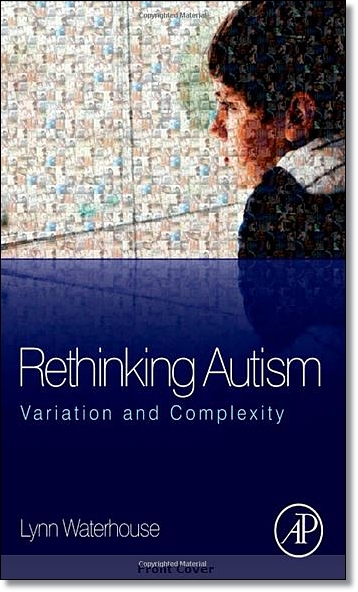
Rethinking Autism Variation and Complexity by Lynn Waterhouse is a recent work which provides a thorough, expert and extremely well researched picture of the variation and complexity of  autism spectrum disorders.

Hopefully the rest of the professional and academic autism community will read Rethinking Autism and come to grips with autism variation, complexity and heterogeneity. The highly influential autism advocacy corporation Autism Speaks has typically done a poor job of representing the heterogeneity of the autism spectrum of disorders. AS has aggressively promoted the careers of John E Robison and Alex Plank two very, very high functioning persons with Aspergers/Autism Spectrum Disorders.  At the same time Autism Speaks has also obscured the existence of the 40% of persons estimated to have autism and an intellectual disability and the large number of persons with autism who also suffer from epileptic seizures.


In what may be a major breakthrough for Autism Speaks, in the post Geraldine Dawson era, and a possible step forward in public understanding of autism disorders a high ranking Autism Speaks official, Michael Rosanoff, Autism Speaks associate director for public health research and scientific review, has acknowledged the heterogeneity of autism spectrum disorders in clear, unambiguous terms, in  a Detroit Free Press article Brain changes of autism may begin in the womb:

"Rather than one disease, autism is now regarded as a collection of conditions with similar traits but different causes, Rosanoff says. People on the autism spectrum are extremely diverse. Some are non-verbal and profoundly disabled; others have successful careers, particularly in science and technology, describing themselves as different, rather than disabled. "Autism is so heterogeneous," Rosanoff says. "We're never going to get to the one cause.""

For anyone else, including other Autism Speaks officials who want to catch up to Mr. Rosanoff in understanding autism disorders, autism researchers and major media columnists interested in a thorough, scholarly view of autism spectrum disorders I strongly recommend Rethinking Autism: Variation and Complexity by Lynn Waterhouse. 

Posted in , , , , , , , , |

Why I Chose Autism REALITY As My Social Media Name


The picture above, for those visiting my blog for the first time, is my son Conor now 17+ years old.  I love him dearly and he brings great joy into my life every day.  He is also severely autistic with severe cognitive challenges (intellectual disability) and like many with those characteristics he also suffers from epileptic seizures.  As great a joy as he is he also engages in acts of self aggression and suffers from sensory challenges, meltdowns and obsessively repetitive behaviors that are very disruptive in themselves.  

For Conor his autism is not a joy, a blessing, a superior ability or a different way of thinking.  It is a serious disability, a disorder,  and his intellectual disability and epileptic seizures are not "co-incidences" or "co-morbidities". They are part  of his reality, a unified part of his reality, together they limit his life expectancy. Those are all facts that I have been determined to face throughout his life so that I do not do him a disservice.

I will never run from Conor's reality because to do so, as it would for an obvious, physical disability, could be harmful to him.  I have chosen long ago not to embrace the non evidence based belief that if I only pretend that autism is a blessing that somehow that belief will magically transform reality. 

I have helped Conor by being part of his life and enjoying his company every single day and will do so as long as I live. I have tried to help my son, and others in my province and country who suffer as he does, through determined advocacy, by  facing reality head on. And I will continue to do so as long as I live.  Others can choose political correctness and feel good cliches. I will continue to deal with autism ... reality ... and love my son as I do.

Posted in , , , , , , |

Dear Anna Kennedy: Please Stop Misrepresenting Autism, Autism Is A Health DISORDER NOT a Gift


Anyone  described as "having autism" or "being autistic" 
would have received an autism disorder diagnosis 
pursuant, in all likelihood, to either the DSM or the ICD 

Dear Anna Kennedy

My 17 year old son Conor who was diagnosed 15+ years ago with "autistic disorder" (now autism spectrum disorder) and profound developmental delays ( a euphemism for intellectual disability) is truly a gift. Conor brings great joy to our lives as shown on the sample pictures that follow.  While Conor is a joy, however, his autism disorder is not.  Nor is his autism disorder a GIFT or a SUPER ABILITY.


Conor's autism is a disability and a disorder and that is WHY he received a medical diagnosis of autism (autistic disorder).  While there may be some autistic individuals with special gifts he is not one of them.  Conor is one of the 40% of persons with autism and intellectual disability.  As you probably know that combination also makes him more likely to suffer from epileptic seizures and indeed Conor has suffered two grand mal seizures in six months.  He also suffered a life threatening reaction to his anti-seizure medication at the time. Other challenges brought by his autism disorder are wandering, self injurious behavior (self biting and head banging) and obsessive behaviors.  There is abundant literature indicating that those with autism, ID and epilepsy are at particular risk of shortened life expectancy.

Drake and Cole deserve to be admonished for their denigration of persons with autism AND for their denigration of persons with intellectual disabilities.  The solution, however, is not to circulate a petition which claims that autism is a gift or a super ability. In doing so you mislead the public about serious, challenges faced by the vast majority of persons with autism DISORDERS.  If you continue to misrepresent autism to the world you will probably cause harm to people like my son who in fact suffer from their autism disorders.  

I have been advocating publicly in my home province of New Brunswick, Canada for 15 years with other parents and we have achieved some success in ensuring that NB children with autism receive evidence based early intervention and that autistic students receive assistance from autism trained education assistants and resource teachers.  I have visited two psychiatric hospital facilities and met severely autistic adults living out their lives in those institutions and I continue to advocate for modern residential care and treatment options for adults with autism.

Any successes we have achieved, or hope to achieve, are based on presenting accurate, informed, evidence based portrayals of the realities of autism disorders to government decision makers and to the public at large.  Portraying autism as a gift misleads everyone about the real challenges faced by many with these very serious disorders.


Please reconsider your misleading public characterization of autism as a gift and super ability and acknowledge clearly that autism disorders are exactly that ... disorders.  My son is a gift, his autistic disorder is not. 

Respectfully,

Harold L Doherty
Fredericton, New Brunswick
Canada

Posted in , , , , |

Conor's Fredericton Adventures 2013 Part I


Conor & Dad, couple of hosers enjoying the snow, eh?


Conor's Saint John River view clear day, above, not so clear below


Conor helps Dad with a visit at the Chalmers Hospital Acute Care Unit


Conor and Mom head out for  a stroll on the North Riverfront Trail


Conor changes his mind about the strolling part


Conor enjoys a late March snowstorm eh?


Conor isn't the only one who gets to fly along our North Riverfront Trail


The Run Jump Fly Boy lets it all loose on the North Riverfront Trail, Fredericton


Just days after Conor was running, jumping and flying down the trail he was taken by ambulance to the Chalmers Hospital in Fredericton where he spent 6 days in the Intensive Care Unit, and a total of 2 weeks in hospital, as a result of a life threatening adverse reaction to his anti seizure medication. 


Many thanks to the incredible doctors, nurses and staff at the Chalmers Emergency and Intensive Care Units for saving our Conor.


Conor didn't take too long to fully recover and there was no better way to show it than heading out on the trail with Mom and Dad ... where he had to wait from time to time for us to catch up.

Looking forward to lots more fun with Conor on the trail and elsewhere in 2013.  I hope he continues to enjoy the wonderful outdoor environment that Fredericton and friends like the Ospreys shown below offer. 


Posted in , , , , , , |

Extremely Grateful


The Intensive Care Unit of the Dr. Everett Chalmers Hospital in Fredericton made a difference for our family.  They saved our son Conor's life after he suffered an adverse reaction to new anti seizure medication.  They gave our son back to us. For that we are, as the CBC caption underneath the audio of my interview in support of the ICU campaign to raise funds for new monitoring equipment put it ... extremely grateful. 

As we understood it Conor's muscles were breaking down and releasing proteins that were very dangerous to his kidneys. The ICU team were monitoring him constantly while flushing the meds out of his system, taking blood samples and other tests and examinations and starting him on the road to recovery.  

Conor spent 6 days in the ICU with his mother beside him where she slept on a cot for the  entire stay.   During those six days the ICU doctors and nurses were reading his vital information in the room he was in and at the large desk area outside the patients' room.  This monitoring equipment is 10 years old and needs replacement.  If you can help the ICU team save lives   please do so by contributing at the Chalmers Foundation

Audiotape of my interview by CBC's Terry Seguin yesterday in support of the campaign to raise funds for new monitoring equipment for the Chalmers' ICU:


Conor at the Chalmers Hospital's Intensive Care Unit 
In the left of the photo above you can see some of the 10 year old 
monitoring equipment that the ICU team used to save Conor's life.


Conor home and happy after his first day back at the swimming pool as part
of his school recreation activities. We asked his school assistant to take him only in to the shallow end but Conor had none of that and went to the deep end, swimming, jumping off the diving board and going up and down the large slide.


Posted in , , , , , |

Conor Goes For A Swim (and a Dive and a Slide) and Shows Terrific Progress In His Rhabdomyolysis Recovery


Conor home after a great swim adventure;
making terrific progress on his recovery

Conor's autism and profound developmental delay were supplemented by two grand mal seizures between November 2012 and April 2013.  The second seizure occurred two days after he began treatment with the anti seizure medication Lamotrogine.  During the second week of treatment when his dosage was increased from 1 to 2 25 mg tablets a day he began to sleep and medical advice was sought.  The specialists were not available quickly but our family doctor saw us early the next day and advised us to cut back on the dosage which we did.  Later that day though Conor still developed a rash and temperature and went to the emergency ward of the local hospital, the DECH.  He spent 6 days in the Intensive Care Unit and two weeks altogether in the hospital.  Conor's adverse reaction to his medication was diagnosed as Rhabdomyolysis a condition in which the muscles break down and release substances which pose great risk to the kidneys.  But Conor received excellent medical attention and was released to come home where he has continued to make made great progress.

We would like to take some credit for Conor's great recovery but the truth is he has led with his own initiative. Conor was jumping up off the couch even before he had his balance and we had to keep a close watch on him. This week Conor returned to school for part days.  His mobility and balance improved dramatically each day and this morning he went swimming at school for the first time since his hospital stay.  The plan was for Conor to go to the pool and sit in the hot tub.  Conor had none of that.  His aide informs us that instead  Conor walked down the accessibility ramp into the shallow end of the pool. He subsequently went to the  diving board where he jumped into the deep end and swam like a fish.  Conor also made for the giant slide where he climbed to the top and slid down.   

I couldn't have asked for a better present then to learn about Conor's swim adventure today.  6 days in the ICU with 5-6 tubes at a time sticking out of my buddy Conor seem  like a bad dream today.  Our Run Jump Fly Boy was flying today and we are happy, very happy.

Posted in , , , , , , |

Conor's Physiotherapy With CBC's Terry Seguin


Conor is still recovering from Rhabdomyolysis, an adverse reaction to anti-seizure medication, Lamotrogine and needs phsyiotherapy to rebuild his damaged muscles, balance and co-ordination.  Just being home is a huge help for Conor, back home with Mom, Dad, his brother and his familiar routines.  One of those routines has been to get out of bed every morning at 6 am.  If he is awake at 5:30 he stays in bed until 6. That is his routine and Conor has a classic autism need for routine.  When he gets up each morning his routine has also included turning on the television and watching  "CBC Terry Seguin".   

Conor has been sleeping on a living room couch since his return so I could be nearby on our other couch to keep an eye on him in case he was in distress. This morning I was in the adjacent kitchen when I heard some loud walking noises in the living room and went in to find that Conor had walked from the living room to the television to turn on CBC Terry Seguin.  Conor has been very wobbly on his feet and he has a long way to go towards recovery so I was startled to see him at our big screen TV.  I was happy though that he had done so without falling and hurting himself. It was a sure sign of progress in his recovery.  His CBC Terry Seguin television walk demonstrated improvement physically and showed that Conor will not stay down, he will keep walking until he is fully recovered.  Two thumbs up for Conor ... and for Terry Seguin!

Posted in , , , , , , , , , |

Autism, Grand Mal Seizures, Meds: Conor Needs Some Kermit Komfort!


Conor enjoys some Kermit Komfort this morning while sleeping and awaiting a trip to see our family physician.  It has been a very difficult week for my Buddy as we work through his seizure and medication issues. Hoping things turn for the better today!

Posted in , , , , , |

Autism and Seizures: Conor's Second Grand Mal Seizure (That We Know Of)


The pictures above were initially posted on this site on May 26, 2012, several months before Conor's 1st known Grand Mal Seizure in November. As I posted then, external conditions were perfect and Conor was enjoying a favorite activity in a favorite location when he suddenly began hitting himself in the head. I don't  know what caused it, Conor lacks the communication skills to explain, but it was definitely internal. Together with many similar circumstances including sudden closing of his eyes and looking blankly into the distance I reported them to his pediatrician as possible seizure activities. The pediatrician did not disagree but did not want to provide medication in the absence of any falling behaviors. Two Grand Mal seizures later and a visit to a neurologist and Conor is just now starting on medication which will hopefuly reduce seizure activity.  

My autistic son's second Grand Mal seizure, of which I am aware, happened when I was in an adjacent room less than 15 feet away this past Sunday. I heard the noises when his seizure began and recognized them this time for what they were. I jumped up immediately, laid him on his side and cushioned his head while his Mom called the excellent 911 emergency responders who took Conor to the local hospital, the DECH, for the excellent care and attention they have have always provided members of our family. (Including me during my recent hospitalization for a major asthma attack). 

 I was scared this past November when Conor suffered his first Grand Mal seizure. I was just as scared this second time. I can't believe that this can happen repeatedly without serious life threatening consequences especially if no one hears him during the night, or if it happens during swimming which he dearly loves. Conor was seen by a neurologist just 4 days earlier and we had, after some base line blood tests were done, started on the low dose end of a progressively heavier medication schedule. Hopefully as the dosage is increased and has time to take effect the seizures will cease. 

Autism, as portrayed by most autism "awareness" groups, is far removed from the reality of severe autism with intellectual disability and sezures/epilepsy. I know it and the APA wizards who contrived the DSM5 ASD know it. Life will be easier for them and the researchers who conduct autism research while excluding those with intellectual disability, a trend which they have followed for many years and which is now condoned by the DSM5. The difficult conditions that are usually found with the severely autistic and make life difficult for autism researchers and clinicians ... intellectual disability, self injurious behaviors and seizures will be reduced substantially by being relegated to the invisible category of intellectual disability in the DSM5. 

I look at the multitude of "autism" studies on Google Scholar and have no idea what most of them involve in terms of autism as a disorder or the serious conditions which are related to the severe forms of autism. I do know that very few of them address the severe realities faced by my son. I do know that when the APA spends several years "recompartmentalizing" the diagnostic criteria for autism and epilepsy to come up with the DSM5 ASD they are doing no one with severe autism any favors. Their efforts and funds would serve a far better purpose if they followed the lead of the emergency responders and hospital staff at the DECH who have treated Conor and cared for him so well. Focus on helping people with autism, particularly those most in need, and save the idle academic curiosity "autism" studies for your retirement.

Posted in , , , , , , , , , , |

The Damaging Impact Of Seizures On Individuals With Autism


Seizures and epilepsy are serious issues for persons with autism and their families as we learned first hand in our home on November 17, 2012 when Conor suffered a very serious seizure. Following is a publicity release issued in respect of Silently Seizing and author Caren Haines, RN (Haines also received input from Nancy Minshew MD) which I am pleased to publish on this site.  I encourage everyone to read this release and consider using any media or social media you can to further its distribution and awareness of seizure issues for persons with autism disorders.


The Damaging Impact Of Seizures On Individuals With Autism

Newark Valley, NY, February 15, 2013 – Many of us know someone whose family is dealing with autism; once considered rare, now 1 in 88 children in this country are diagnosed with an Autism Spectrum Disorder (ASD).

Silently Seizing:  Common, Unrecognized and Frequently Missed Seizures and Their Potentially Damaging Impact on Individuals With Autism Spectrum Disorders (AAPC Publishing) by Caren Haines, RN, and valuable input by Nancy Minshew, MD, deals with the overwhelming challenge for those living with silent seizures. Many are confronted by anger and falsely accused of disorderly conduct, indecent exposure and drug abuse; while some are even unfairly arrested because the bizarre actions exhibited during a seizure have led to frequent misdiagnosis, medical mismanagement and, in the worst case, commitment to a mental institution.

Because they are difficult to diagnose, or due to a lack of awareness and understanding, as many as 30% of all children and young adults with ASD may have undiagnosed seizure disorders. Silently Seizing is a breakthrough book that explores what most doctors won't tell you – that often the symptoms of autism are caused by seizures, undetectable with standard diagnostic tools.

At age 2, the author’s son was diagnosed with autism. By the time he was 12, his diagnosis didn't account for his uncontrollable aggression, the acrid smells that lingered in his mind and the odd voices that screamed at him from inside his head. By the time he was 18, his out-of-control behavior mirrored a mood disorder with psychotic features. Silently Seizing begins with a close-up look at this family's journey and examines a disorder that cannot always be identified in a clinical setting.

As a registered nurse, Caren Haines relied on her training to help her decipher her now 24-year-old autistic son’s perplexing behaviors. Based on knowledge gained from years of intensive research and information from top researchers in the field of autism, she is helping families become free from the debilitating symptoms of silent seizures and psychosis.

Haines’ says, “Intersecting at two medical subspecialties, neurology and psychiatry, the child who has autism and partial seizures is at a serious disadvantage. By inadvertently allowing children's brains to “silently seize,” we are robbing them of their ability to function normally. Untreated, these seizures can predispose children to develop behavioral disturbances, such as self-injury, aggression and psychosis, which are seen in many cases of autism. If they are treated early with anti-seizure medications, many children show amazing gains in expressive language and comprehension. More importantly, many children lose their diagnosis of autism.”

Backed by up-to-the-minute research, Silently Seizing: Common, Unrecognized and Frequently Missed Seizures and Their Potentially Damaging Impact on Individuals With Autism Spectrum Disorders is a must-read book that includes sections describing autism, the seizure-autism connection, tips for diagnosing and treating seizures, as well as how to better understand children's behavior. It acts as a virtual guide to help parents navigate through this complex and mystifying disease. For more information, please visit: www.bit.ly/Rb2WBW.

Caren Haines is also co-author of Georgia, The Flying Dog, a children’s book that explores the concept of unconditional love and acceptance of our differences.

###

Established in 1999, the mission of AAPC Publishing is to be the first source for practical solutions related to autism spectrum and related disorders. AAPC Publishing is an independent publisher, targeting professionals and parents alike. AAPC Publishing strives to offer publications at affordable prices so that important resources are available to anyone with an interest in the autism spectrum.

MEDIA APPEARANCE:

Caren Haines, AAS Nursing, R.N. - Presentation and Book Signing Event at the 2013 Southeastern “Across the Spectrum” Conference - Autism/Asperger Conference and Expo

When:  February 28th, 2013 - Ms. Haines' presentation is from 11:00 am – 12:15 pm; immediately following she will be at the AAPC booth signing books.

Where: Gwinnett Convention Center - www.gwinnettcenter.com
               6400 Sugarloaf Parkway
               Duluth, Georgia   30097

ADDITIONAL INFORMATION: Hosted by: Georgia Autism Conferences and Exceptional Ed Events.  Georgia Autism Conferences strives to meet the needs of the Georgia Autism community by providing quality seminars and conferences throughout the state on topics related to Autism Spectrum Disorders.

Posted in , , , , , , , |

EEG Day Yesterday Went Very Well: Conor Was Outstanding!


Conor's EEG exam had been scheduled for yesterday as a result of his scary Grand Mal seizure a few weeks ago.  (Not that I am superstitious but I did wear my Tom Brady Patriots jersey to the EEG for good luck) The EEG techs indicated it would take time to get set up: about 20 minutes.  They hoped to get at least 45 minutes of readings after that.  With Conor's autistic disorder, profound developmental delays and sensory issues I questioned in my own mind whether they would be able to get 45 minutes before Conor started removing the head wrap with the connecting wires.  

My questions were answered positively when Conor provided approximately 70 minutes of readings without breaking a sweat! His pediatrician had consulted the neurologist involved and they decided on the best medication for Conor to take that would allow him to be drowsy (and calm) while interfering minimally with the readings.  His pediatrician, Dr. Messenger, provided clear instructions to me to give Conor his medication one hour before   the scheduled start time. Perhaps because of his own procedures, perhaps because we have met and discussed Conor and autism on several occasions over the years, he politely made sure Dad got the message and repeated the instructions twice.   The technicians and staff at the DECH EEG section were also outstanding.  We completed a service survey on leaving and rated our experience 10 out of 10! Conor's mom Heather also contributed to the successful outcome. She snuggled on to the hospital bed with Conor and stayed beside him throughout the process.

The star of the day though was Conor himself.  The techs allowed me to see his face on one of their visual screens. I could only see his eyes and above.   His eyes were open and he was calm throughout 70 minutes.  When it was over he left the hospital on his own steam holding our arms for support in the slippery snow storm conditions outside the hospital as we left.  We went through a Burger King drive through on the way home and rewarded Conor with a BK burger.  (Dad got one too!) Conor was quiet but content until he went to sleep at his regular time last night.

Small things can be a challenge with Conor. That is reality, Conor's autism reality, every day. Yesterday a big challenge, an EEG exam, was no problem for my buddy who provided 70 minutes of readings.   Meanwhile, last evening, Tom Brady led the Patriots to a thrashing of the upstart Houston Texans. Brady was excellent. Conor was our MVP though. 

Posted in , , , , , |

Autism and Conor's Grand Mal Seizure: What Lies Ahead?

I know very little about seizures except that they are associated generally with epilepsy, that they are common in people with autism disorders and that they can be absolutely terrifying to a parent, even one whose personal conceits mislead him into thinking he is immune to fear. When I heard strange noises from my younger, severely autistic, and intellectually challenged son Conor and found him convulsing violently on our living room floor  I thought for an instant that we might lose him. At this time I know very little about seizures.  I know very little except how dangerous  seizures can be.

I can say that I had suspected seizure activity in Conor on previous occasions and reported them to his pediatrician over a year ago. The previous incidents involved his eyes rolling back in his head, his eye lids closing with an unusually forceful appearance, or his face grimacing and head tilting up and in another direction. But there was no falling or convulsing and no further examinations were conducted.  The Grand Mal seizure he suffered two weeks ago was on a different scale and prompted a call to 911 and the terrific emergency response team and ambulance that took Conor and I to the emergency ward of our local hospital, the DECH.  Thanks to the emergency response team the hospital staff were waiting and prepared with readings having been called in en route. An EEG is now scheduled and I will try to help Conor deal with the stresses of that procedure sufficiently to enable adequate readings to be taken.  Beyond these few facts I know very little about seizures or epilepsy which apparently is the most likely explanation at this time although no diagnosis is confirmed prior to further testing. All I know at this time is that seizures can be very dangerous, even deadly, and my responsibilities to my son now require that I learn much more, as a parent always must, about the very serious challenges they present to my son.

I have much reading to do.  I do have some very good friends in New Brunswick's autism advocacy community who have children with autism who have suffered seizures and  have given me some helpful information. I have for some time admired the courage of Kim Oakley who has posted YouTube videos of her son who suffers from autism and epilepsy and authors Autism, Epilepsy and Self-Injurious Behavior a blog  featured on the side bar of this site.  My admiration for her and her family and the challenges they have faced is increased by Conor's recent Grand Mal seizure.

Since my son's seizure I have found in the New York Times on line an informative and awareness raising article Unmasking Silent Killer in Epilepsy by Aliyah Baruchin. The article reports very directly, with no sugar coating, about Sudep, sudden unexplained death in epilepsy. It includes the story of Steve Wulchin who found his 19 year old son Eric lying on the floor after suffering from an epileptic seizure. He had died at about 2:30 in the morning. We were more fortunate, Conor's seizure occurred around 11 am in the morning and I heard him making unusual noises before finding him in violent convulsion on our living room floor. Had it happened at 2:30 am or some other time when no one was awake the ending could have been very different. The Baruchin article goes on to report: 

"The cause of Eric’s death was ultimately listed as Sudep, for sudden unexplained death in epilepsy. The syndrome accounts for up to 18 percent of all deaths in people with epilepsy, by most estimates; those with poorly controlled seizures have an almost 1 in 10 chance of dying over the course of a decade. Yet many patients and their families never hear about Sudep until someone dies. Mr. Wulchin said none of Eric’s four neurologists ever mentioned it to the family. “The message we got back was, ‘There’s no reason why he can’t live a long and normal life,’ ” he said. “It never occurred to me that this was a possibility. 

Now, physicians, researchers, advocates and relatives like Mr. Wulchin, a technology executive, are trying to raise awareness about Sudep. One of their goals is to establish registries of deaths and autopsy results, building databases to support future research. Sudep most often affects young adults, typically ages 20 to 40, with a history of the convulsive seizures once known as “grand mal.” Others at risk include those with difficult-to-control seizures, or seizures at night; people who take a large number of anti-epileptic medications or take them irregularly; African-Americans with epilepsy; and people with epilepsy whose I.Q. is under 70. Many victims die in their sleep, and their bodies are often found face down. That prone position suggests that they may have had a neural, respiratory or cardiac crisis — or some combination — that left them momentarily unable, like SIDS babies, to rescue themselves from suffocating. “After a seizure, the person is in a dramatically reduced state of awareness, and even their reflexes are reduced,” said Dr. Orrin Devinsky, director of the Comprehensive Epilepsy Center at New York University. For most people, he went on, “once your airway’s obstructed, you roll over. For people with epilepsy, they don’t.” 

Epilepsy, wrapped for centuries in secrecy and stigma, has gained wide attention in recent years. Not so with Sudep; even neurologists who specialize in epilepsy sometimes feel that mentioning it to patients who aren’t at high risk may impose too much of a burden. “Whenever I speak to a group of colleagues about telling all their patients, it’s controversial,” said Dr. Elizabeth Donner, a neurologist at the Hospital for Sick Children in Toronto and co-founder of the advocacy group Sudep Aware. “People worry about having a negative impact on the quality of life of people with epilepsy if we tell them about this. Mr. Wulchin and other advocates say this attitude needs to change, even in the absence of a concrete way to predict or prevent a sudden death. ”

Since I commented about Conor's seizure on this blog I have also received a  news release The Damaging Impact Of Seizures On Individuals With Autism:

Newark Valley, NY, November 30, 2012 – Many of us know someone whose family is dealing with autism; once considered rare, now 1 in 88 children in this country are diagnosed with an Autism Spectrum Disorder (ASD). 

Silently Seizing: Common, Unrecognized and Frequently Missed Seizures and Their Potentially Damaging Impact on Individuals With Autism Spectrum Disorders (AAPC Publishing) by Caren Haines, RN, and valuable input by Nancy Minshew, MD, deals with the overwhelming challenge for those living with silent seizures. Many are confronted by anger and falsely accused of disorderly conduct, indecent exposure and drug abuse; while some are even unfairly arrested because the bizarre actions exhibited during a seizure have led to frequent misdiagnosis, medical mismanagement and, in the worst case, commitment to a mental institution.  

Because they are difficult to diagnose, or due to a lack of awareness and understanding, as many as 30% of all children and young adults with ASD may have undiagnosed seizure disorders. Silently Seizing is a breakthrough book that explores what most doctors won't tell you – that often the symptoms of autism are caused by seizures, undetectable with standard diagnostic tools. 

At age 2, the author’s son was diagnosed with autism. By the time he was 12, his diagnosis didn't account for his uncontrollable aggression, the acrid smells that lingered in his mind and the odd voices that screamed at him from inside his head. By the time he was 18, his out-of-control behavior mirrored a mood disorder with psychotic features. Silently Seizing begins with a close-up look at this family's journey and examines a disorder that cannot always be identified in a clinical setting. 

 As a registered nurse, Caren Haines relied on her training to help her decipher her now 24-year-old autistic son’s perplexing behaviors. Based on knowledge gained from years of intensive research and information from top researchers in the field of autism, she is helping families become free from the debilitating symptoms of silent seizures and psychosis. 

Haines’ says, “Intersecting at two medical subspecialties, neurology and psychiatry, the child who has autism and partial seizures is at a serious disadvantage. By inadvertently allowing children's brains to “silently seize,” we are robbing them of their ability to function normally. Untreated, these seizures can predispose children to develop behavioral disturbances, such as self-injury, aggression and psychosis, which are seen in many cases of autism. If they are treated early with anti-seizure medications, many children show amazing gains in expressive language and comprehension. More importantly, many children lose their diagnosis of autism.” 

Backed by up-to-the-minute research, Silently Seizing: Common, Unrecognized and Frequently Missed Seizures and Their Potentially Damaging Impact on Individuals With Autism Spectrum Disorders is a must-read book that includes sections describing autism, the seizure-autism connection, tips for diagnosing and treating seizures, as well as how to better understand children's behavior. It acts as a virtual guide to help parents navigate through this complex and mystifying disease. For more information, please visit: www.bit.ly/Rb2WBW."

I received the above news release via email with out receiving a copy of the book which I have not read. I do intend to acquire a copy of the book. Not for comment on this blog at a later date, although that may happen, but as just one element in an effort to understand a dangerous reality in my son's life.

Posted in , , , , |

One Grand Mal Seizure Later Conor Is Back


Conor was happy and full of life on our trail walk today. 
At times his feet didn't even touch the ground.

The Grand Mal seizure Conor experienced Saturday morning took him down pretty hard (and scared the bejeebers out of his Dad).  He did recover well though and today, under a beautiful blue sky in Fredericton,  Conor showed off his energy and enthusiasm as he, Mom and Dad (the invisible guy behind the camera) enjoyed a trail walk adventure to the Superstore.  Yes, we are taking it very seriously with medical examinations to continue but today we enjoyed Fredericton in the fall and we very much enjoyed our time with Conor. 


Posted in , , , , |

No Autism. Today, Conor's Grand Mal Seizure Scared The Hell Out Of Me


The Joy of Conor

Every day with my buddy Conor is a joy because of who he is. Every day with Conor requires extra concern and attention to his well being because of the autism disorder that restricts his life and presents serious challenges to his ability to participate in it like others of his age.  Today though autism was the least of Conor's, or my, worries.  Today, shortly before 11 am I was upstairs and heard Conor downstairs making various noises ... as he often does.  But there was something different about the sounds I heard.  When Conor makes noises they may sound unusual at times but he is clearly making them, he is in control.  What I heard today was different.  Conor was making noises but they were not his usual kinds of utterances, he was not in control.  I went downstairs to see what was happening. 

When I saw Conor he was lying on his side on the living room floor.  His body was shaking violently back and forth. He did not appear conscious and he was not responsive to any attempt to elicit a response. Thick green and yellow fluid  had oozed out the side of his mouth. I tried to lift him and it was like trying to lift a pile of 190-195 pound bricks, there was no response. For a brief instant my mind flashed with the possibility that this might not end well.  I called 911 and the terrific  Emergency Measures Response team were soon at our door. With them  to offer direction, and with Conor's big brother providing help, I sat Conor up and then changed him. We were soon on the way to the Dr. Everett Chalmers Hospital where the wonderful staff of the DECH hospital took great care of our Conor with me and Mom beside him. Right now Conor is sleeping on one of our living room couches, with lots of blankets and comfy pillows. Mom is spending the night on the other couch. 

Autism is not responsible for today's emergency. We don't know for sure if epilepsy or some other condition was involved. What we do know beyond any doubt is that Conor suffered a grand mal seizure as defined by the Mayo Clinic:

Grand mal seizure 

 Definition By Mayo Clinic staff

A grand mal seizure — also known as a tonic-clonic seizure — features a loss of consciousness and violent muscle contractions. It's the type of seizure most people picture when they think about seizures in general. Grand mal seizure is caused by abnormal electrical activity throughout the brain. In some cases, this type of seizure is triggered by other health problems, such as extremely low blood sugar or a stroke. However, most of the time grand mal seizure is caused by epilepsy. Many people who have a grand mal seizure will never have another one. However, some people need daily anti-seizure medications to control grand mal seizure.

Hopefully the connections between various disorders ... or groups of symptoms ... known as autism, intellectual disability and epilepsy .... will be studied thoroughly and more time will not be wasted by academics spending years trying to find the perfect, stream lined definitions of disorders which are heterogenous, varied, complex and dangerous to those who suffer from them.  

For today I am thankful that my Conor is sleeping safe and sound in our living room.  Today I say thank you to the wonderful emergency measures response personnel and the staff of the Dr. Everett Chalmer Hospital emergency trauma ward.  Thank you very much.

Posted in , , , |

Search

Swedish Greys - a WordPress theme from Nordic Themepark. Converted by LiteThemes.com.