Showing posts with label autism disorders. Show all posts

SFARI Highlights Serious Risk of Epilepsy for Teens with Autism and Intellectual Disability


"Children with autism who are older than 13 years and have low intelligence are at the greatest risk of having epilepsy, says one of the largest epidemiological studies on the issue to date1Children are typically diagnosed with epilepsy after having at least two seizures — uncontrolled surges of electrical activity in the brain. About 2 percent of the general population has epilepsy2. Most studies peg its prevalence among people with autism at 30 percent.
The new study, published 4 July in PLoS One, breaks down this prevalence by age. It finds that among children with autism, up to 12.5 percent of children aged 2 to 17 have epilepsy. The rate is largely driven by epilepsy in children aged 13 to 17, who have more than double that prevalence. The study also found that low intelligence — defined as having an intelligence quotient (IQ) below 70 — is associated with a cluster of symptoms seen in people who have both epilepsy and autism. The symptoms include difficulty with daily living, poor motor skills and language ability, regression and social impairment."
SFARI (Simons Foundation Autism Research Initiative), Risk of epilepsy in autism tied to age, intelligence, Laura Geggel, August 19, 2013

The information in the SFARI article above helps inform the public about a study and an issue of great importance, one that should be brought to the attention of parents, family doctors and pediatricians and clinical psychologists - the substantial numbers of persons with autism, intellectual disability, epilepsy. and the adolescent years during which many with autism and ID first endure epileptic seizures.

The study itself could be a capsule summary of my son's disorders during his first 17 years of life.  Diagnosed at age 2 (literally the day after his second birthday) , after several months of tests, Conor suffers from Intellectual Disability the ultimae taboo in autism world discussions.  Together autism and intellectual disability increase dramatically the chances of developing epilepsy.  As the article and study it reports indicate adolescence is an age when epilepsy appears for many with autism and intellectual disability.  That is exactly what happened with our son Conor.

Conor's first Grand Mal seizure, as I reported on November 17, 2012, (No Autism. Today, Conor's Grand Mal Seizure Scared The Hell Out Of Me) literally shook our world. We had reported what we thought were seizures to Conor's pediatrician 18-24 months before.  He would suddenly stare off looking away or close his eyes as though he was in pain. His pediatrician agreed they were probably seizures but indicated medication was probably not a good idea since there was no falling involved in his seizures.  On November 17 things changed dramatically with Conor's first Grand Mal.  He would later suffer a second Grand Mal,  and shortly thereafter a life threatening adverse medication reaction, which I have also reported on this blog.

Our experience led me to believe that pediatricians and other doctors, as well as clinical psychologists, should inform parents and advise them to be on the look out for the development of seizure activity in their autistic children.  Hopefully this major study reported by SFARI and the prestige of the Simons Foundation Autism Research Initiative will encourage professionals  to inform and educate parents of autistic children particularly those with intellectual disability to be on the lookout for seizure activity and how to recognize them.  They may also want to direct them to Silently Seizing written by Caren Haines, RN and mother of an autistic son who suffered from seizures.  The book pulls no punches in talking about the damage that can occur  from seizures and would be an honest introduction to the seizure activity and its risks. 

Posted in , , , , , , |

Conor Countdown Continues In Support of FLEXIBLE, EVIDENCE BASED Inclusion


The Conor Countdown continues, as Conor gets up each day at 6 am and changes the number reflecting the number of days until school resumes.

My son Conor, and his autism disorder disability,  have been well accommodated in schools here in Fredericton, New Brunswick, Canada.  He has benefited both from the assistance of education aides and resource teachers trained in the UNB-CEL Autism program and by placement, at our request, outside the regular classroom for his ABA based instruction.

 His placement is not segregation in the sense of the racial segregation which once prevailed in the American south.  His placement reflects the fact that Conor's autism based sensory sensitivities and need for predictable routine, coupled with his individualized learning style and instruction methods require a quieter learning environment. 

In the regular classroom, early in Conor's education,  he bit his hands every single day until he was removed to a quieter location where the self injurious biting ceased. Now in high school his individualized instruction continues but he has many, many opportunities for socialization at the Leo Hayes High School Resource Centre with other students with special needs, in common areas and activities like school outings, visits to the cafeteria and ... Conor's favorite by far ... in weekly visits to the Nashwaaksis Middle School swimming pool. 

Conor loves his flexible, evidence based schooling so much that the summer, with no school, is a difficult time for him.  We do our best to help him during this period and Conor does his best to help himself.  One of the activities that helps him get through the summer break is the "Countdown".  Each day, every day, at 6 am Conor gets up and changes the number on his board under the question "How Many Days Until School?"  He can see the number getting smaller each day, he can take steps each day to make the number smaller reducing his anxiety and frustration.

Conor's self injurious biting while placed in the regular classroom was a vote against the extreme, non evidence based "regular classroom for all students" philosophy. Now, during the school year Conor packs his lunch bag every night and puts it in front of the side door to the driveway and Dad's car. During the summer Conor does his "How many days until School" countdown.  Both activities are strong compelling statements from Conor in support of the flexible, evidence based, inclusive education he has received at school since being removed from the regular classroom.

Posted in , , , , , , , , , |

Why I Chose Autism REALITY As My Social Media Name


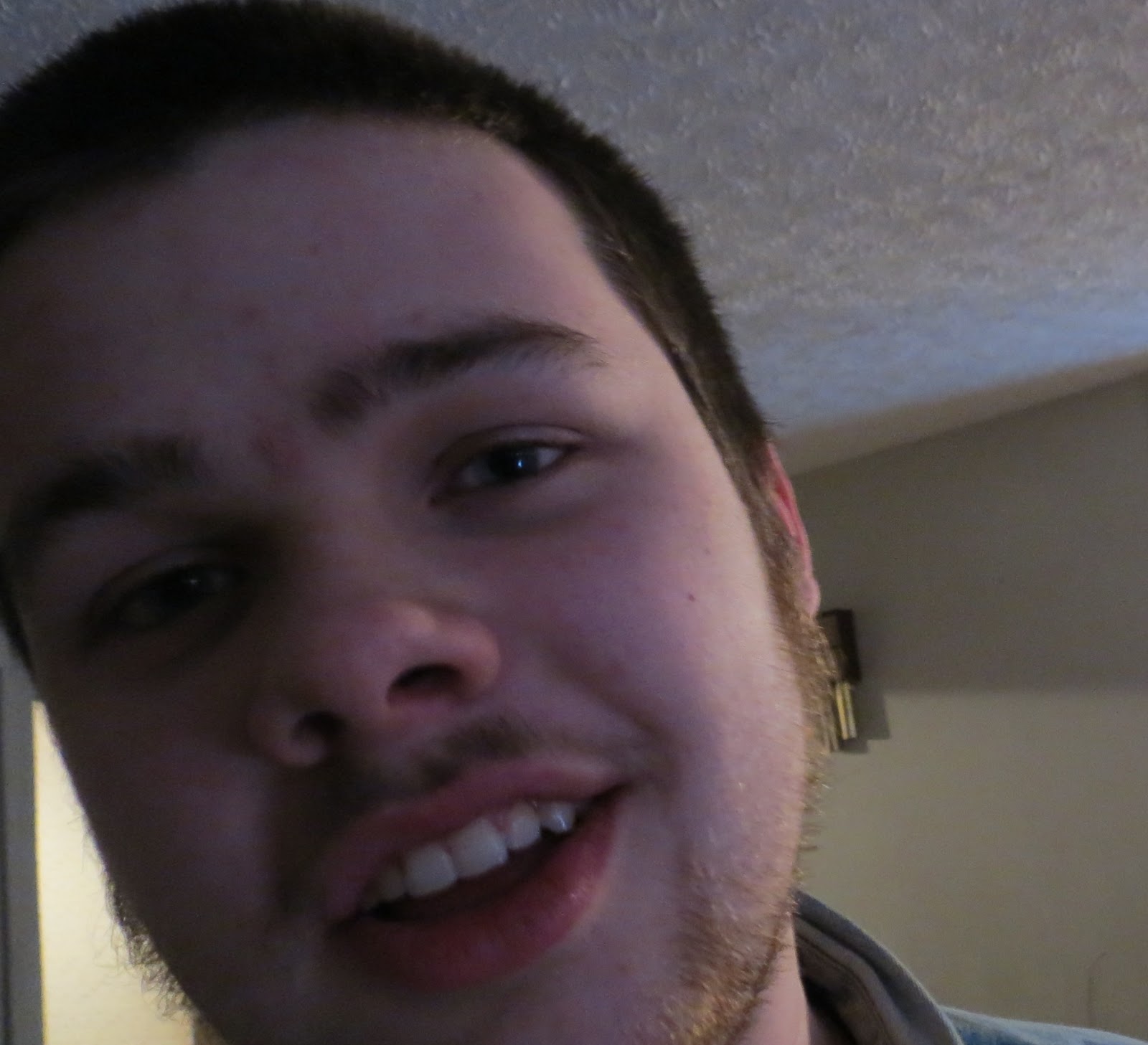
The picture above, for those visiting my blog for the first time, is my son Conor now 17+ years old.  I love him dearly and he brings great joy into my life every day.  He is also severely autistic with severe cognitive challenges (intellectual disability) and like many with those characteristics he also suffers from epileptic seizures.  As great a joy as he is he also engages in acts of self aggression and suffers from sensory challenges, meltdowns and obsessively repetitive behaviors that are very disruptive in themselves.  

For Conor his autism is not a joy, a blessing, a superior ability or a different way of thinking.  It is a serious disability, a disorder,  and his intellectual disability and epileptic seizures are not "co-incidences" or "co-morbidities". They are part  of his reality, a unified part of his reality, together they limit his life expectancy. Those are all facts that I have been determined to face throughout his life so that I do not do him a disservice.

I will never run from Conor's reality because to do so, as it would for an obvious, physical disability, could be harmful to him.  I have chosen long ago not to embrace the non evidence based belief that if I only pretend that autism is a blessing that somehow that belief will magically transform reality. 

I have helped Conor by being part of his life and enjoying his company every single day and will do so as long as I live. I have tried to help my son, and others in my province and country who suffer as he does, through determined advocacy, by  facing reality head on. And I will continue to do so as long as I live.  Others can choose political correctness and feel good cliches. I will continue to deal with autism ... reality ... and love my son as I do.

Posted in , , , , , , |

Sound Advice for Autism Speaks


In yesterday's commentary  Autism Speaks Joins Drake And J.Cole In Insulting 40% With Autism AND Intellectual Disability I criticized Autism Speaks for stigmatizing persons with Intellectual Disability, particularly the 40% of persons on the autism spectrum with ID, the 40% that Autism Speaks seldom acknowledges in its promotions and literature.  

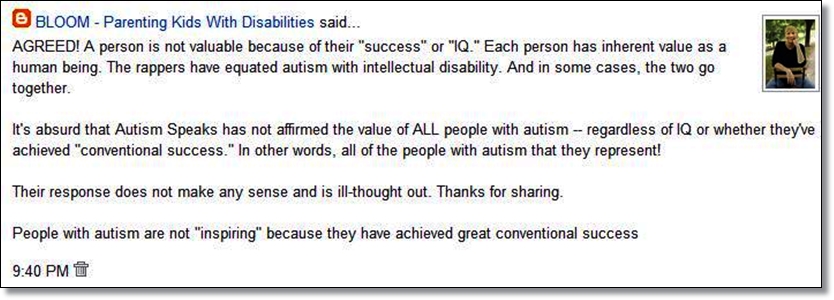
I received the comment, posted above, from BLOOM - Parenting Kids With Disabilities editor Louise Kinross that expresses my issue with Autism Speaks' approach to intellectually disabled members of the autism spectrum better than I did. It would do Autism Speaks and the autism community it purports to represent  a great service to give serious consideration to Louise's comment. 

Posted in , , , , |

Autism Speaks Joins Drake And J.Cole In Insulting 40% With Autism AND Intellectual Disability


Autism Speaks has joined rappers Drake and J. Cole in insulting persons with Intellectual Disability particularly the 40% of the autism spectrum with intellectual disability.  The rappers had published song lyrics referring in an insulting manner to persons who are "autistic, retarded".  Autism Speaks did not simply criticize the rappers for denigrating persons who were autistic or intellectually disabled. Autism Speaks criticized the rappers for perpetuating negative stereotypes and for failing to recognized the many persons with autism and "other" disabilities who have enjoyed great success and talents.  

Presumably it would have been OK in the view of Autism Speaks if the rappers had mocked only the 40% with intellectual disabilities or those who were not successful or did not display exceptional talents.   It is not clear to this father of a severely autistic son with profound developmental delays, who lacks an exceptional talent, who Autism Speaks for but it clearly does not speak for my son. 

There are no doubt many in the high functioning end of the autism spectrum community who would  be insulted by the rappers lyrics ... my son who would not understand the lyrics is not one of them. I love my son and I take insult at the smarmy lyrics of Drake and Cole simply because they intended to insult persons like my son who are autistic and/or intellectually disabled not because they failed to recognized the talents and intellects of higher functioning persons with autism disorders. I am also ticked off, but not surprised, by Autism Speaks for essentially endorsing the rappers mocking of intellectually disabled a term which does not even appear in the Autism Speaks criticism.   Nowhere are autism's 40% intellectually disabled more invisible than within the Autism Speaks agenda:

Hip Hop Lyric Insults Autism Community

"Lyrics from the recently released song “Jodeci Freestyle” from hip hop artists Drake and J.Cole have many in the autism community up in arms. The song, which was released last month and is now getting airplay, contains the following lyric by J. Cole: “I’m artistic, you n----s is autistic, retarded." 


These lyrics are offensive and perpetuate negative stereotypes. There are many inspiring individuals with autism and other disabilities who have achieved great success across a variety of artforms, including music. We encourage J. Cole to recognize their talents and learn from the positive example they have set for all of us."

Posted in , , , , |

Conor Debunks TWO Autism Myths Eh!

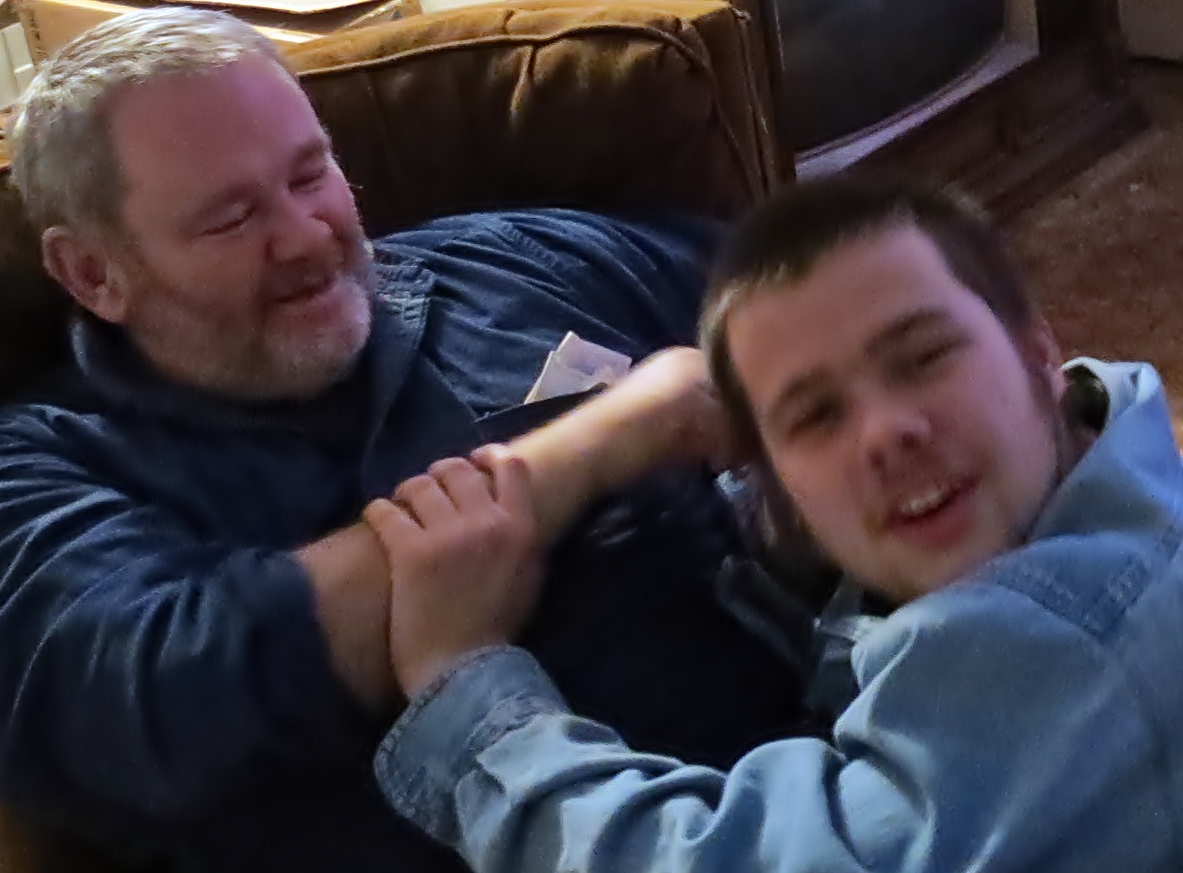
Yesterday was Canada Day and Conor sported his Team Canada shirt to celebrate.  He also debunked not one but TWO autism myths.  Conor has received ABA based intervention at school for 8 years.  Yet, contrary to the myth that ABA causes discomfort and harm to persons with autism disorders,  Conor shows his terrific smiles again ( see also side bar on this blog) debunking that nonsense yet again.  He also debunks the myth that people with autism disorders do not like hugs and his Mom was very happy to assist in the demonstration!


Posted in , , , , , |

Unthinking Autism Guide Shannon Rosa Attacks Autism Parents .... AGAIN.


Shannon  Rosa, with the Twitter help of Seth Mnookin and Dr. Jon Brock is at it again, misrepresenting autism disorders and the state of knowledge about autism causation and of course blaming autism parents fighting for their children for the latest report of a professional caregiver abusing an autistic child because they dare talk honestly about the negative aspects of autism DISORDERS :

"At their worst, negative media-sown autism messages influence people like Greg Simard, who brutally beat a 12-year-old, non-speaking autistic boy in his care. Simard justified his actions by saying of the boy, .... Some autism parents never find their way out of that initial horror and negativity, .... These parents see other autistics writing, speaking, participating in online communities, and their furor increases -- how dare those autistics say good things about autism, when their kids need 24 hour supervision?"

Ms. Rosa's wild, hostile opinions are not substantiated by evidence or professional consensus of any kind but that doesn't stop Mnookin and Brock  from spreading her hateful messages.  In the instant case there is no basis whatsoever to the claim that the media focuses on negative stereotpyes or that it does so because of  bad autism parents.  Temple Grandin is celebrated around the world.  John Elder Robison and son Cubby regularly receive promotion on CNN.  Television series inevitably portray autism in the form of the socially awkward but otherwise brilliant, high functioning techie, geek syndrome as autism. 

Rosa's claim that the abusive caregiver is influenced by the alleged overwhelming dominance of negative media stories is absurd and, once again, based on no evidence whatsoever. An abuser makes a cheap comment in the media and Rosa accepts it as reality because, in her mind, it confirms her negative views of other autism parents who do not share her views. This is no accident.  A mother in Colorado killed her autistic child and stated that she did so because she feared the child was autistic.  Rosa leaped to the attack against autism parents speaking honestly about their children's autism disorders blaming them for the mother's actions. What Rosa bypassed in her attack  was the fact that the prosecution had concluded that the woman was insane and for that reason did not prosecute her. 

I am not going to repeat all of Rosa's misinformation about autism on this site.  Her statements of fact are in fact simply her opinions, opinions that reflect her hostility towards autism parents who fight to improve their childrens' life prospects by speaking honestly in the effort to find autism causes, cures, treatments and services  for their children.  These parents, and I consider myself one of them, do not conform to Rosa's angry .... and flat out silly ... mischaracterizations.

While Rosa is out with her non evidence based rants about autism disorders and parents fighting for their autistic kids here is a bit of autism reality from the New England Journal of Medicine, the kind of stuff Rosa doesn't want the world to know about:

"Genomics, Intellectual Disability, and Autism

"Autism spectrum disorders have been estimated to affect as many as 1 in 100 to 1 in 150 children.4,5 Disorders on the autism spectrum share features of impaired social relationships, impaired language and communication, and repetitive behaviors or a narrow range of interests. Many children with autism spectrum disorders also have intellectual disability, and approximately 75% have lifelong disability requiring substantial social and educational support. Thus, autism and intellectual disability together represent an important health burden in the population and are frequent reasons for referral to genetics and developmental pediatrics clinics for a diagnostic workup."

Prediction: the next similar tragedy that befalls an autistic child will also be blamed by Rosa on other autism parents with whom she disagrees.  Her views will unfortunately be promoted by the Mnookins,  Brocks and other professional and academic Neurodiversity subscribers.  Thinking Persons Guide to Autism? Not even close.

Posted in , , , , , , |

Adult Autism Care in New Brunswick: An Open Letter to Premier David Alward


May 6, 2013

Honourable Premier David Alward
Respected Cabinet Ministers and Party Leaders

Dear Premier Alward

I am the Acting President of the Autism Society New Brunswick  and a parent that was involved, with many  other parents, in the advocacy that led to the establishment of the UNB-CEL autism intervention training program, the provision of early autism intervention to children aged 2-5, UNB-CEL  autism specific training of Education Aides and Resource Teachers and the reversal of the decision to close the Stan Cassidy Center tertiary care autism team. We also argued with some modest success for an evidence based, student centered, definition of inclusive education. We have been less successful in advocating for  a continuum of placement options to accommodate the varied, complex needs of autistic students although individualized instruction does continue in some schools. 
 
Autism successes in New Brunswick have resulted from many factors including access to sound, knowledgeable, professional advice that oriented us toward evidence based, scientific goals to assist our children's very challenging needs and responsive  leadership in the Lord and Graham governments.  Despite these gains, which are in need of further refinement and advancement,  we must, with sorrow, shame, and fear, acknowledge that  we have to date failed to see any substantial improvements in services  for New Brunswick adults with autism disorders. That failure, like the aforementioned successes, must be shared by parent advocates and government decision makers.
 
Several news agencies have highlighted events in Ontario where parents left their 19 year old severely autistic son with a government office because they were unable to continue providing him with the necessary level of care.  Many New Brunswick parents including me, and my wife, have also long feared that day. That fear grows stronger with each year of non action, each year of failure to address seriously the needs of autistic adults across the autism spectrum. 
 
Many parents in New Brunswick seek meaningful assistance to help care for their adult autistic children in their homes.  Obviously at some point parents grow too old or exhausted and ultimately become enfeebled and pass on. We do so  with the knowledge that no credible, comprehensive autism care system is in place to care for our adult autistic children who require assistance when we can no longer help them.  Moderately to severely autistic and intellectually challenged autistic adult children will face serious difficulty living in group homes with untrained staff and non existent educational and social options.  Our most severely affected autistic adults will live in the Restigouche Regional Hospital psychiatric unit or in facilities out of  province like the Spurwink facility in Maine. 
 
Money is always an issue in government decision making and that is understood by all.  However, the failed group home system that exists in NB   also carries costs such as placements in Spurwink Maine at several hundred thousand dollars a year per individual.  Money is part of the problem but so too is the overwhelming dominance of the "community"philosophy in the mindsets of NB's public decision makers.  There is no question that those who have promoted the community/inclusion model in NB have made very substantial contributions to the lives of most persons with disabilities in our province but  the dominance of their beliefs, and the rigidity with which they are maintained, precludes the development of evidence based alternatives and prohibits the development of a facility that can provide permanent residential care and treatment for those with severe autism and co-morbid disorder challenges.  
 
Autistic residents of group homes have been charged with assault when in conflict with untrained staff.  An autistic youth was housed temporarily on the grounds of the Miramichi correctional facility and at least two New Brunswick residents with autism have been sent to Spurwink in neighboring Maine.  We do not have a modern, professional,  permanent residential care and treatment facility for adult New Brunswickers with severe autism in large part because of the rigid adherence to a decades old philosophy that simply ignores contrary evidence including those persons who are sent to psychiatric and general hospital wards, out of province facilities and correctional facilities to spend their lives.  Public events to discuss disability policies and service requirements are typically organized in pre-arranged "table discussion" formats that prevent serious open discussion of contentious issues.
 
Over the last decade the Autism Society New Brunswick advocated for a continuum of residential care and treatment options to provide for our autistic adult children.  Three years ago, during the 2010 provincial election,  UNB Professor Emeritus (Psychology) and practicing clinical psychologist Paul McDonnell articulated in a CBC interview the concept of a continuum or network of residential care and treatment center.  Professor McDonnell spoke of the need for a modern adult autism residential care and treatment system in New Brunswick with a center that would provide residential care and treatment for those severely affected by autism, a center that could also assist in the training and service provision in group homes and facilities in communities around the province.  The center would be a modern facility that could provide educational and social elements in the lives of severely autistic adults. No progress has been made in moving towards such a home grown solution notwithstanding the international recognition that NB received for its successful UNB-CEL early intervention autism training program.
 
On behalf of the Autism Society New Brunswick, and parents of autistic children and adults, I ask you Mr. Premier to commit to the modern, professional system of adult autism residential care  articulated by Professor McDonnell.  An adult autism residential care and treatment facility based in Fredericton, with professional administration, trained staff, evidence based treatment,  education and social programs for the residents is needed.  An autism center would  provide desperately needed  permanent residency for the most severely affected by autism disorders, training and advice for staff in community based group homes, and assistance for parents whose adult children are still living with them.  The Fredericton location would be centrally located and in close proximity to other New Brunswick autism successes and expertise at UNB and the Stan Cassidy Center.  
 
Much time has passed with no serious response to our calls to address the needs of autistic adults. There has been no progress to date. Hopefully that will now change and work can begin as soon as possible on the development of an autism residential care and treatment facility.
  

Respectfully,

Harold L Doherty
Fredericton

cc. ASNB
      media

Posted in , , , , |

Autism, Grand Mal Seizures, Meds: Conor Needs Some Kermit Komfort!


Conor enjoys some Kermit Komfort this morning while sleeping and awaiting a trip to see our family physician.  It has been a very difficult week for my Buddy as we work through his seizure and medication issues. Hoping things turn for the better today!

Posted in , , , , , |

Mother Of An Autistic Son Asks Autism Speaks for Some Actual Autism Awareness


The following commentary  is from the blog Muslimah Next Door  written by Dishad Ali. It addresses an issue that I have raised several times - the lack of real autism awareness created by autism awareness events. The author's comments at Muslimah Next Door under the title When an Autism Awareness Event is Anything But are followed by a letter from  Harshita Mahajan the mother of a teenage autistic son addressed to Autism Speaks.  I sincerely hope that Autism Speaks takes the mother's concerns, and the contents of her letter, seriously and begins to provide during autism awareness events awareness of the realities of autism disorders including some of the challenges presented by autism mild and severe. 
"We’ve hit the middle of April, and while there was a flurry of focus on autism at the start of the month, it still is very much “Autism Awareness Month.” Awareness events sponsored by local and national organizations continue to occur across the United States, but sometimes I wonder how much real “awareness” is actually happening? How many of these events just serve as fundraisers for the organizations sponsoring it?
Fundraising is not bad, and of course autism organizations must capitalize on the attention garnered in this month. But, if you’re going to frame event as “autism awareness,” then there be some education happening to make people “aware” of what autism is, what it entails, how it can be manifested. (Unless it is a closed event just for the autism community) There better be autism ambassadors at these events making sure things go as smooth as possible for those with autism (and without) who attend said events.
My friend Harshita Mahajan took her autistic teenage son Sahil to an autism awareness event recently sponsored by Autism Speaks, at which her son had a lapse of self-control. What happened after that was upsetting and resulted with Harshita leaving with her son. For this to happen at an autism awareness event – well the irony is not lost on me. Read her story. Share it. Let’s make sure events advertised as being about ”autism awareness” educate people, not just fundraise."
I encourage anyone interested in autism disorders to read the letter by Harshita Mahajan as posted on the Muslimah Next Door blog under the commentary When an Autism Awareness Event is Anything But.

Posted in , , , |

Autism and Seizures: Conor's Second Grand Mal Seizure (That We Know Of)


The pictures above were initially posted on this site on May 26, 2012, several months before Conor's 1st known Grand Mal Seizure in November. As I posted then, external conditions were perfect and Conor was enjoying a favorite activity in a favorite location when he suddenly began hitting himself in the head. I don't  know what caused it, Conor lacks the communication skills to explain, but it was definitely internal. Together with many similar circumstances including sudden closing of his eyes and looking blankly into the distance I reported them to his pediatrician as possible seizure activities. The pediatrician did not disagree but did not want to provide medication in the absence of any falling behaviors. Two Grand Mal seizures later and a visit to a neurologist and Conor is just now starting on medication which will hopefuly reduce seizure activity.  

My autistic son's second Grand Mal seizure, of which I am aware, happened when I was in an adjacent room less than 15 feet away this past Sunday. I heard the noises when his seizure began and recognized them this time for what they were. I jumped up immediately, laid him on his side and cushioned his head while his Mom called the excellent 911 emergency responders who took Conor to the local hospital, the DECH, for the excellent care and attention they have have always provided members of our family. (Including me during my recent hospitalization for a major asthma attack). 

 I was scared this past November when Conor suffered his first Grand Mal seizure. I was just as scared this second time. I can't believe that this can happen repeatedly without serious life threatening consequences especially if no one hears him during the night, or if it happens during swimming which he dearly loves. Conor was seen by a neurologist just 4 days earlier and we had, after some base line blood tests were done, started on the low dose end of a progressively heavier medication schedule. Hopefully as the dosage is increased and has time to take effect the seizures will cease. 

Autism, as portrayed by most autism "awareness" groups, is far removed from the reality of severe autism with intellectual disability and sezures/epilepsy. I know it and the APA wizards who contrived the DSM5 ASD know it. Life will be easier for them and the researchers who conduct autism research while excluding those with intellectual disability, a trend which they have followed for many years and which is now condoned by the DSM5. The difficult conditions that are usually found with the severely autistic and make life difficult for autism researchers and clinicians ... intellectual disability, self injurious behaviors and seizures will be reduced substantially by being relegated to the invisible category of intellectual disability in the DSM5. 

I look at the multitude of "autism" studies on Google Scholar and have no idea what most of them involve in terms of autism as a disorder or the serious conditions which are related to the severe forms of autism. I do know that very few of them address the severe realities faced by my son. I do know that when the APA spends several years "recompartmentalizing" the diagnostic criteria for autism and epilepsy to come up with the DSM5 ASD they are doing no one with severe autism any favors. Their efforts and funds would serve a far better purpose if they followed the lead of the emergency responders and hospital staff at the DECH who have treated Conor and cared for him so well. Focus on helping people with autism, particularly those most in need, and save the idle academic curiosity "autism" studies for your retirement.

Posted in , , , , , , , , , , |

Blood Tests and Autism: Conor and the DECH Both Did Very Well Today! Thank You Very Much!


Our entire family has had nothing but good experiences at the Doctor Everett Chalmers Hospital, the "DECH", in Fredericton and that trend continued this morning when we took Conor for blood tests at 7 am.  The tests were required by the consulting neurologist to establish some base lines before starting some new medications to address Conor's seizure activities.  We contacted the DECH yesterday to see if they could accommodate Conor with a direct entry to the blood works room without taking a number and waiting in line. We explained his autism, intellectual disability and tendency to have meltdowns when frustrated. The administrative staff were happy to oblige and the team that met us this morning were outstanding!  They knew exactly how to interact well with Conor and everything went perfect!  

Conor did well, very well, today and so did the DECH staff to whom we say, once again, Thank You!

Posted in , , , , , |

Conor's Autism Advocacy Awards

The primary front line autism service providers, regardless of where one lives, are parents.  In Canada at least parents have also been the first and most effective advocates for services for autistic children from BC to Ontario to New Brunswick to Newfoundland and all points between.  For most parents recognition of that fact is important only to prevent others with less understanding of the impacts of autism on our children from purporting to speak on their behalf when they do so contrary to our children's best interests. The only award most of us really need though are the hugs and smiles we receive from our children.  Following are some awards Conor has given to his Mom and Dad:


This picture above was taken during my recent 6 day hospitalization for a chest infection and asthma attack. Lights were harsh for picture taking and the cell phone camera was not great so the picture is blurred but speaks volumes. Conor missed his Dad and I missed him.  His visit cheered his old Dad considerably. Conor's hugs and smiles have added immeasurably to my enjoyment of life and helped me stay focused as an autism advocate on what counts most - helping my son and others with autism enjoy a fuller more rewarding life. Conor has not been skimpy in handing out awards to his Mom and Dad:


Posted in , , |

Conor's Autism Diagnosis 15 Years Ago Today


Conor, 2nd Birthday, the day before he is diagnosed with 
PDD-NOS (subsequently changed to Autistic Disorder)

Yesterday was Conor's 17th birthday.  Today is exactly 15 years since he was diagnosed with an autism disorder, PDD-NOS, the day after his second birthday shown in the pictures above.  Shortly afterward he was re-diagnosed with Autistic Disorder, and he was also subsequently assessed with profound developmental delays.  I can't say that I am overly impressed with the research into autism causes, treatments or even our understanding of what constitutes autism that has taken place in the last 15 years.   15 years ago intensive early behavioral intervention was the only seriously evidence based intervention for autism as it remains today. 15 years  after Conor's initial diagnosis there are no substantial breakthroughs in understanding the biological basis of autism as the goal posts keep getting moved to allow the dominance of genetic autism research to continue and to continue with the lion's share of research dollars. Today, like 15 years ago, possible environmental contributors to autism are largely ignored and receive only a small fraction of the autism research dollars available. 

Even our understanding of autism diagnostic criteria are about to change again and for what reason?  The DSM5 does not hold out any serious hope of increasing our understanding of autism disorders, symptoms, causes or possible treatments.  The DSM5 will undoubtedly muddy the waters of autism research even further. Debates still rage over whether the astonishing increases in autism diagnoses of the last 15 years are real or whether they are caused by increased social awareness and ... the diagnostic definition changes of the 1994 DSM-IV.  NOW in Conor's 15th year post autism diagnosis yet another definition will be forced upon North Americans?  How can this possibly help autism research?  

Services have been obtained for autistic children in various parts of North America in the 15 Conor autism years.  Here in New Brunswick I joined with other parents fighting for early intervention, school and services for autistic adults.  We made significant gains in early intervention service delivery as recognized by Dr. David Celiberti of the Association for Science in Autism Treatment and in our schools.  In adult care nothing has changed as yet,  nothing at all. Here in New Brunswick, Canada, we still dump our severely autistic adults in hospitals, jails, hotels and foreign facilities rather than develop our own enhanced adult autism network.  Many others live in group homes with untrained staff. The gains we made in early ntervention and schools are being eroded and adult care has not been addressed at all.

If I sound gloomy I don't intend to be.  I will advocate for Conor as long as I am alive and I can only do so by  being honest.  His autism challenges are real and I will not betray him by pretending that his autism is a joy.  Conor himself is a tremendous joy and the proof is in the pictures you can find on this blog site and on my Facebook page which is open to public view.  See for yourself.  Conor's autism is no joy but he sure is. 

Posted in , , , , , |

Medicare's Orphans: Jean Lewis On The Struggle for Autism Treatment In Canada

The video and clip below are from the Medicare for Autism Now web site and feature MFAN co-founder Jean Lewis, one of Canada's foremost autism advocates, providing an articulate, personally informed summary of the struggle for autism treatment in Canada.  

Jean keeps the discussion on a non-partisan level and discusses the fight to end Canada's inhumane and  discriminatory exclusion of treatment for those with autism disorders in the context of other historic struggles for liberation from discrimination based on race and gender. A very important point to remember in Jean's message is that such struggles are never overnight affairs.  They are essentially political wars which involve many battles before the wars are won.  

For those of us who are parents it is difficult  but it is, and always will be, necessary to stay engaged in the battles, to continue the fight and to assist newcomers who need to join the political armies fighting for a humane, Canadian  government to fulfill the promise of Medicare of which Canadians are justifiably proud  and ensure coverage of evidence based treatment for autism disorders. 

Jean Lewis, co-founder of Medicare for Autism Now and Civil Rights Now and co-producer of Medicare’s Orphans discusses the purposes of the film — which are provide a detailed history of the autism treatment movement, and to help maintain momentum in the campaign for justice.


Posted in , , , , , , , , , , |

Conor's Quiet Joy


Autism is a spectrum in many ways including the ways in which it is presented through various media. Everybody, particularly the main stream media,  loves the feel good stories of accomplishment.  We all suffer when we see images of self injurious behavior: common occurrences in severe autism although rarely reflected in the mainstream media or in autism research accounts.  The photos of my son Conor in the composite above show him during the recent holidays in a calm, happy mood that is seldom depicted in portrayals of autism. 

Despite the hustle and bustle that comes with the season Conor, who can become quite agitated by loud, strange noises and disrupted routines, was able to stay calm, enjoy the company of visitors and ...  be happy.  I had not viewed these images when they were taken and found them while saving some recent outdoor pictures.  

I can't explain to someone who does not have a severely autistic child with profound developmental delays how much moments like these mean to me. Conor's quiet joy is not the stuff of a CNN feature but capturing and revisiting it  makes this Dad very happy. 

Posted in , , , , , , , |

TPGA Aghast and Angry: Slate Dares Print Autism Parent Critique of Neurodiversity Ideology


TPGA guru Shannon Des Roches Rosa (SDDR) is aghast and angry because Slate.com has dared publish "Is the Neurodiversity (ND)  Movement Misrepresenting Autism?", a gentle critique by autism parent Amy S.F. Lutz, of the harmful, irrational Neurodiversity ideology embraced by the leaders of the ironically named "Thinking" Person's Guide to Autism.   Self labelled as a guide for "Thinking" Persons the TPGA is harshly critical of anyone, especially autism parents, who disagree  with them; anyone who portrays autism as a disorder or as a group of disorders, deficits or symptoms.  In the Neurodiversity world of the TPGA  the autism and related symptoms of a child must be accepted as blessings, and attempts to treat and cure those symptoms, deficits or disorders rejected, by THINKING persons.  That is the true autism path according to Neurodiversity, that is the true autism path according to SDDR and the "Thinking" Person's Guide to Autism.  Woe to any parent or publication that dares disagree with the self appointed arbiters of rational autism thought at the TPGA.

In a quick and angry response to the Slate article  Des Roches Rosa was, to her credit, open and honest about WHY she was upset.  SDRR. as reflected in the title of her response, was upset because the author of the article questioned Neurodiversity ideology: Why Did Amy S.F. Lutz Attack the Neurodiversity Movement?.  The alleged attack consists of pointing out the fact that very high functioning self advocates who do not required medical treatment, or treatment of any kind, misrepresent the harsher realities of low functioning persons with autism disorders. She points out correctly that such misrepresentation, especially coupled with the DSM5 substitution of Asperger's for autism, will probably result in  ever fewer autism treatment advances.  Ultimately this misrepresentation and misdirection of resources will probably result in the very limited progress to date in autism treatment research being slowed even more ... to the detriment of the low functioning autistic persons most in need of progress in autism research.

The TPGA and other ND faithful will undoubtedly deluge Slate.com with demands that they be permitted an opportunity to present their replies to the Lutz article.  They truly believe theirs is the one true path and voices of dissent must  be silenced or at least drowned out. They believe that strangers are better placed to speak on behalf of low functioning autistic children then their parents, including me, who speak on  behalf of our own children.  

I have no desire to tell  high functioning autistic self advocates that they must seek treatment.  I have no desire to tell SDDR, or Kristina Chew referenced by SDDR, that they should seek treatment for their low functioning autistic children.  I absolutely will not, though,  let them speak on behalf of my son.  I urge all parents who want to see treatments developed for their autistic children to continue the fight. The ND movement including the TPGA are set in their ways and will continue to try and impose their views of autism on the world.  For our children's benefit we will  have to continue to speak up and attempt to counter their misguided efforts. 

Thank you Amy S.F. Lutz for speaking out.

Posted in , , , , , , , |

Autism 2012: Disaster for the Autism Spectrum's Intellectually Disabled


"Autism Spectrum Disorder
Must meet criteria A, B, C, and D:

A.    Persistent deficits in social communication and social interaction across contexts, not accounted for by general developmental delays, and manifest by all 3 of the following:"

Autism annual reviews have been published by a number of sources most of  which ignored or mis-characterized the most important autism event of 2012.  The most important event by far and the one with the most negative implications for those who actually suffer from autism symptoms was the APA approval, on  Saturday, December 1, just before the holiday season, of the DSM5 as it is now written including the new Autism Spectrum Disorder.  The new ASD will preclude future autism diagnoses for those most severely affected by autism symptoms: those with moderate to severe intellectual disability. 

I have written many times about the express targeting for exclusion of those with intellectual disabilities.   I have been virtually alone in my criticism of this exclusion but I stand by my objection to that exclusion.  It is reprehensible.  It helps  insurance providers and governments that seek to reduce provision of autism treatment and benefits.  It helps those academics and researchers who are building careers researching every trivial idea they find fascinating without helping or bringing anyone with an autism disorder any closer to treatment or cure of the symptoms which in fact restrict their ability to function in the real world.  They are now free to conduct autism research without the need to include difficult to work with intellectually disabled, severely autistic children and adults among their subjects. It helps those persons with High Functioning Autism and Aspergers, their parents and other loved ones, who feel stigmatized by association with low functioning, intellectually disabled autistic children and adults.

Intellectual opposition to the direction the DSM5 is taking autism did arise in 2012 in Rethinking Autism: Variation and Complexity by Professor Lynn Waterhouse. She has articulated in a very comprehensive analysis, backed by learned authorities on every point, the fundamental problems with the new streamlined, simplified version of autism.  The title summarizes her arguments succinctly: autism is in essence a group of symptoms characterized by variation, heterogeneity and complexity.  The unified, simplified DSM5 ASD ignores that heterogeneity.  Every parent, academic and clinician who has repeated Stephen Shore's caution,  now a cliche, "if you've met one person with autism, you've met one person with autism" knows that autism is heterogenous, varied and complex.  The DSM5 however, contrary to all research and real life experience, pretends otherwise.  The DSM5 ASD is a false step, a road block to the understanding of autism disorders, autism symptoms.  Debates over whether autism is increasing, and what factors are involved with causing autism will be muddied again for another generation by the redefinition of autism.

The moderately and severely intellectually disabled who otherwise display the social communication and restrictive, repetitive criteria of the DSM5's New Autism Spectrum Disorder, will not be included in the new autism diagnostic era. They will be relegated to the Intellectual Disability group which will receive very little research attention or dedication of resources.  After all it will be deemed wiser to concentrate resources, including treatment and cure research resources, on those for whom successful results are more likely .... just as the distinguished, open minded, intellectually conflict free and oh so compassionate members of the DSM5 autism committee have done in their pre-Christmas gift to the intellectually disabled, severely affected members of the pre-DSM5 autism spectrum.  

Posted in , , , , , , , |

Conor's Wheel of Fortune Gooey Brownie Tickle Game


Hey Dad, wanna play the Gooey Brownie Tickle Game?


I had  trouble, despite the very substantial weight difference, 
holding Conor back from giving me a Gooey Brownie Tickle 


And the Gooey Brownie Tickle winner is: Conor ... of course!

Conor has enjoyed watching Wheel of Fortune and Jeopardy! with Mom and Dad for many years.  Today we were watching our DVR recording of yesterday's Wheel of Fortune episode. The game winner was unable to solve the Bonus Round two word puzzle.  She got "Brownie" but not the first word for which few letters had appeared.  Conor giggled when he heard Pat Sajak read the answer "Gooey Brownie".  Mom immediately started a Gooey Brownie tickle fest with Conor who then came over to the chair I was in to give a reluctant Dad a Gooey Brownie tickle.  (And demonstrate both his appetite for fun and his growing strength).  A great start to the holiday season today!

Posted in , , , |

Vaccine Autism Shocker: Study Reports Strong Evidence of Autism Connection to Aluminum and Acetaminophen Exposure

It is quite possible that a paper claiming that empirical data confirm autism symptoms are related to Aluminum and Acetaminophen exposure, and possibly to the MMR vaccine,  could put the research standing and careers of the authors in jeopardy.  The paper in the journal Entropy is tantamount to treason in some health circles and could invite serious retribution from those who have elevated vaccines to a level beyond criticism.  

The researchers, to my great surprise, did not try to sugar coat their findings in  Empirical Data Confirm Autism Symptoms Related toAluminum and Acetaminophen Exposure, published in Entropy, November 7, 2012: 

Abstract: Autism is a condition characterized by impaired cognitive and social skills, associated with compromised immune function. The incidence is alarmingly on the rise, and environmental factors are increasingly suspected to play a role. This paper investigates word frequency patterns in the U.S. CDC Vaccine Adverse Events Reporting System (VAERS) database. Our results provide strong evidence supporting a link between autism and the aluminum in vaccines. A literature review showing toxicity of aluminum in human physiology offers further support. Mentions of autism in VAERS increased steadily at the end of the last century, during a period when mercury was being phased out, while aluminum adjuvant burden was being increased. Using standard log-likelihood ratio techniques, we identify several signs and symptoms that are significantly more prevalent in vaccine reports after 2000, including cellulitis, seizure, depression, fatigue, pain and death, which are also significantly associated with aluminum-containing vaccines. We propose that children with the autism diagnosis are especially vulnerable to toxic metals such as aluminum and mercury due to insufficient serum sulfate and glutathione. A strong correlation between autism and the MMR (Measles, Mumps, Rubella) vaccine is also observed, which may be partially explained via an increased sensitivity to acetaminophen administered to control fever.


.......................................................................................................................

6. Conclusion 

In this paper, we have presented some analyses of the VAERS database which strongly suggest that the aluminum in vaccines is toxic to vulnerable children. While we have not shown that aluminum is directly causative in autism, the compelling evidence available from the literature on the toxicity of aluminum, combined with the evidence we present for severe adverse reactions occurring much more frequently following administration of aluminum-containing vaccines as compared to non-aluminumcontaining vaccines, suggests that neuronal damage due to aluminum penetration into the nervous system may be a significant factor in autism. The fact that mentions of autism rose steadily concomitant with significant increases in the aluminum burden in vaccines, is highly suggestive. However, it is possible that other factors, such as more aggressive reporting or simultaneous increases in other environmental toxins, e.g., herbicides or pesticides, or aluminum in other products such as antiperspirants and antacids, may have contributed to these observed increases. We also observed a strong correlation between the MMR vaccine and autism, which we suggest could be explained by the effects of acetaminophen. 

We have proposed elsewhere that an impairment in cholesterol sulfate synthesis in the skin and in the vasculature may be causative in autism, and we argue here that vaccines can act synergistically with this impairment in the vulnerable child. We propose that simple corrective measures such as increased sunlight exposure and decreased use of sunscreen may help protect a child from a severe reaction to aluminum-containing vaccines, but we also feel that the vaccine industry should find a way to reduce or even eliminate the aluminum content in vaccines. 

As might be expected Dr. David H. Gorski, writing under the handle Orac has already spewed some venom on  one of the authors of the study in his blog commentary of November 20, 2012, Stephanie Seneff: Following the Geiers dumpster-diving in the VAERS database.  I am not sure why Gorski engages in the childish, self inflating style that he does. There is no question he has a loyal following but I doubt very much that he is persuading parents or others with vaccine concerns to abandon those concerns and vaccinate themselves and their children.   I suspect his venomous hostility is actually counter productive.

I have received the usual recommended vaccines and so have both of my sons. I have never suspected vaccines as contributing factors to my younger son's severe autistic disorder and profound developmental delays although I have not closed my mind on the possibility either should further research demonstrate such a connection.  I believe that more research is needed to persuade those with concerns and, if connections are shown, to recommend study and changes to eliminate those possible connections.

What I don't recommend is the strategy of attacking vaccine safety skeptics and expecting the attacks to change their minds.  That approach simply has not worked. A much better scientist than David Gorski, a gentleman named Albert Einstein, characterized "doing the same thing over and over again and expecting different results" as a form of insanity.   I don't expect Orac to change his approach. Nor do I expect the results of his attacks to yield different results.  What would be helpful is to have the Seneff study findings properly rebutted or, if confirmed, the problems they point to addressed.

Posted in , , , , , , , |

Search

Swedish Greys - a WordPress theme from Nordic Themepark. Converted by LiteThemes.com.