Autism, Genes & Environment: Why It Took So Long for the Genetic Autism Myth To Die


Studies of twins have established that it is not 100 per cent genetic, since even among identical twins, when one has autism, the likelihood of both twins having autism is only about 60 per cent. This means there must also be an environmental component, but what it is remains unknown.


Simon Baron-Cohen, The Sunday Times, December 15, 2007


The CAT, California Autism Twins, study has finally driven a silver stake through the autism is primarily genetic myth, finally debunking the "it's gotta be genetic" creature that has had an iron grip on autism research funding. What is truly difficult to understand is why did it take so long? Why has funding continued to pour into the genetic autism research accounts to the near total detriment of environmental research funding?  Professor Simon Baron-Cohen stated the obvious on several occasions including the above statement made in 2007.  The "refigerator mothers" half baked nonsense was accepted by virtually the entire public health community for many years before it was debunked.  In recent years the autism is genetic myth has held sway with little critical analysis even after Baron-Cohen's observations and despite producing no significant results whle inhaling most of the autism research dollars.  

What both myths were based on though was the assignment of blame to the parents of autistic children. In the refrigerator mothers theory it was cold emotionless mothers who were to blame. In the autism is genetic myth of course it was the genes of the parents. The refrigerator mothers and parental genetics myths both deflected possible causal fault away from commercial and health care products.   


Now the world's attention is turning toward possible environmental causes of autism. What both of the previous history lessons should teach us though is that even when environmental autism research is conducted parents will still be suspect and possible environmental factors generated by economic and medical interests, whether in the air, water, food supplies, children's toys, jewelry, water bottles, and of course vaccines  will be examined only reluctantly and studies implicating such factors will be subject to the most withering and microscopic examination .... the kind of rigorous analysis that was rarely applied to the refrigerator mothers and genetic autism myths during their decades of dominance. 

Posted in |

Autism and Intellectual Disability in the DSM5: My Submission to the DSM5 Neurodevelopmental Disorders Work Group


July 17 2011

Neurodevelopmental Disorders DSM Work Group
American Psychiatric Association

Dear NDD Work Group Members

I am the father of a 15 year old son diagnosed at age 2 with Autistic Disorder and assessed with profound developmental delays conditions which severely restrict his everyday functioning. He requires, and will require, 24/7 adult supervision. Since his diagnosis 13 years ago I have actively advocated here in New Brunswick, Canada for government funding of evidence based early intervention and autism specific training of education assistants and resource teachers who work with autistic students. With other parents we have enjoyed some success in  these areas although we have had much less success in advocating for adequate adult care and treatment facilities for autistic adults. Throughout our efforts we were guided, and to the extent that we succeeded, we did so because of the leadership of American autism researchers such as Dr. O. Ivar Lovaas and others who established the evidence basis for the effectiveness of applied behavior analysis as an autism therapy. Throughout this time from 1998 the DSM definition of Autistic Disorder and the other Pervasive Developmental Disorders, the latter of which has become identified in popular usage and in research as the Autism Spectrum,  was constant. Now the entire category for the "Autism Spectrum" is formally being merged together in the DSM-5  into one disorder divided only by the extent to which daily functioning levels are impaired by the newly defined ASD. I have two primary concerns about this new Autism Spectrum Disorder as it goes through substantive change at both the "high functioning" and "low functioning" end of the "autism spectrum".

1) The effect of the changed definition on research conducted under the  DSM-IV definition of Autistic Disorder and the other PDD's. 

Although it is a far from being a unanimously held position,it has been often mentioned in discussion of the startling increases in rates of autism diagnoses that the increases are accounted for entirely by the definition changes of autism in the DSM-IV, even though that occurred some 17 years ago, and increased social awareness. It seems entirely predictable that a newly changed definition will also confound our understanding of real autism prevalence. 

2) The exclusion from Autism Spectrum Disorder diagnosis of those with Intellectual Disabilities.

As the father of a son who is severely affected by Autistic Disorder and who is "profoundly developmentally delayed" I am most concerned with the language of the DSM5's new  A 09 Autism Spectrum Disorder which appears to exclude those, or many of those, with intellectual disabilities from an Autism Spectrum Disorder diagnosis. The proposed Autism Spectrum Disorder definition stipulates that criteria A,B,C and D must all be met in order for an ASD diagnosis to be given. Criterion A states:

A.    Persistent deficits in social communication and social interaction across contexts, not accounted for by general developmental delays,...

The wording I have highlighted, "not accounted for by general developmental delays" when used in the context of persistent deficits in social communication and social interaction across contexts appears to exclude any one with an Intellectual Disability from also being diagnosed with Autism Spectrum Disorder, since Intellectual Disability will involve exactly those deficits.  

This interpretation of the effect of Criterion A of the proposed Autism Spectrum Disorder is also supported by reference to Criterion B of the proposed A 00  Intellectual Developmental Disorder:

B.         The deficits in general mental abilities impair functioning in comparison to a person’s age and cultural group by limiting and restricting participation and performance in one or more aspects of daily life activities, such as communication, social participation, functioning at school or at work, or personal independence at home or in community settings.

It seems clear that in any case of Intellectual Developmental Disorder the mandatory ASD Criterion A, persistent deficits in social communication and social interaction, will always be "accounted for by general developmental delays" and an Autism Spectrum Disorder diagnosis will be precluded.

I am aware that  Ms Lisa Jo Rudy of About.com autism has communicated recently with Dr. Bryan King of the NDD work group on the issue of the possible  exclusion of intellectually disabled from autism diagnoses. Dr. King provided the following response:

"There is no explicit desire to move anyone in to or out of specific diagnostic groups, however, by creating more specificity we believe that people may be given diagnoses that better capture their individual conditions. The qualifier above about general developmental delays ensures that the social communication deficits are more specific, and also potentially allows for earlier diagnosis if appropriate.

Just as typically developing infants and toddlers are able to engage in very rich social communication and interaction across contexts, appropriate to their developmental level, so too most individuals with intellectual delays or disabilities are also able to communicate. On the other hand, significant deficits in social communication in toddlers may suggest the presence of autism. What the criterion above is meant to ensure is that clinicians take into account what is typical in terms of social communication abilities at a given age or developmental level, and not assume, for example, that a lack of social perception in a teenager with intellectual disability not automatically suggest the presence of autism. As is currently the case, some individuals with Down Syndrome may also meet criteria for autism; but most will not."

The language of the proposed DSM is express and intentional. The absence of desire to remove anyone in or out of the groups does not mean that there is no intent to do so whether desired or not. It is the wording of the proposed revision that will determine future diagnoses. The exclusionary wording I have referenced is not explained in any meaningful way by Dr. King's comment. "More specific" to my humble interpretation is simply another way of saying not part of a general intellectual deficit. Which again indicates that the Intellectually Disabled will be excluded from the DSM's New Autism Spectrum Disorder.

I have commented on several occasions on my blog site Facing Autism in New Brunswick about the high numbers of persons with autism disorders who are also intellectually disabled. I  have cited sources for the pre-1994 definition of autism including CDC autism expert Dr. Marshalyn Yeargin-Allsopp who stated that those with intellectual disabilities constituted "the vast majority" of those with autism prior to the 1994 changes which added Asperger's Disorder to the PDD's.  The Canadian Psychological Association also referenced 80% of persons with non-Asperger's autism as having intellectual disabilities a figure which seems consistent with the CDC's two surveys showing 41-44% of persons with any autism spectrum disorder, including Aspergers, as having intellectual disabilities.  The 1994 changes diluted the 80% figure to roughly 40% by simply adding a group who by definition did not have intellectual disability, those with Asperger's. Now the DSM5 is poised to push the intellectually disabled off the spectrum completely and will essentially  redefine autism as what is currently Asperger's disorder.  

The DSM5  attempt to completely separate Autism and Intellectual Disability ignores the historically close relationship between those with ID  and those severely affected by autism disorder however labelled and ignores the possibility that the the ASD deficits are just components, differing in severity and expression, of intellectual disability. An Italian study has looked at the relationship between Intellectual Disability and called for more research of that relationship:

Psychiatry Unit, Department of Neurological and Psychiatric Sciences, University of Florence, Hospital of Careggi, Florence, Italy. gplamalfa@videosoft.it

Abstract

BACKGROUND: In 1994, the American Association on Mental Retardation with the DSM-IV has come to a final definition of pervasive developmental disorders (PDD), in agreement with the ICD-10. Prevalence of PDD in the general population is 0.1-0.15% according to the DSM-IV. PDD are more frequent in people with severe intellectual disability (ID). There is a strict relationship between ID and autism: 40% of people with ID also present a PDD, on the other hand, nearly 70% of people with PDD also have ID. We believe that in Italy PDD are underestimated because there is no agreement about the classification system and diagnostic instruments.
METHOD: Our aim is to assess the prevalence of PDD in the Italian population with ID. The Scale of Pervasive Developmental Disorder in Mentally Retarded Persons (PDD-MRS) seems to be a very good instrument for classifying and diagnosing PDD.

RESULTS: The application of the PDD-MRS and a clinical review of every individual case on a sample of 166 Italian people with ID raised the prevalence of PDD in this population from 7.8% to 39.2%.

CONCLUSIONS: The study confirms the relationship between ID and autism and suggests a new approach in the study of ID in order to elaborate a new integrated model for people with ID."

Conclusion:


With great respect to Dr. King and the DSM5 NDD work group I submit that the proposed Autism Spectrum Disorder wording of the DSM5 along with the Intellectual Developmental Disorder clearly operate to remove those with Intellectual Disability from the autism spectrum.  I have no way of assessing the motivation for this change with any certainty. I do not really see the explanation offered by Dr. King as providing a coherent rationale for such a fundamental change. Some critics of the previous DSM-IV changes including Dr. Allen Frances have expressed regrets about the unintended consequences that flowed from that last revision. I can really see no good coming to persons with autism and intellectual disability who will no longer be considered autistic because mandatory criterion A can be accounted for by general developmental delay.  With no intent to insult or engage in confrontation it looks more like the intent is to make life easier for doctors in making autism diagnoses without having to explore the more complicated aspects of a diagnosis when intellectual disability is present.  It also makes it easier to calm the fears of those with Asperger's diagnoses who worried about being lumped together with those with autism in the new autism spectrum disorder. What is not at all clear is how this really helps in any way  those with autism and intellectual disability.

I ask this working group to reconsider its decision to add language excluding intellectually disabled from the proposed Autism Spectrum Disorder in the DSM5.

Respectfully,

Harold L Doherty
Fredericton, New Brunswick, Canada

Posted in , , , |

A Perfect Conor Summer Morning


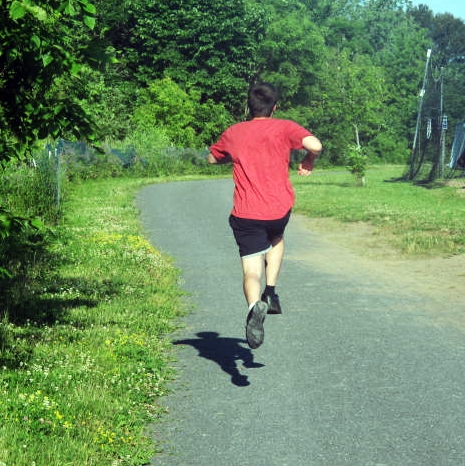
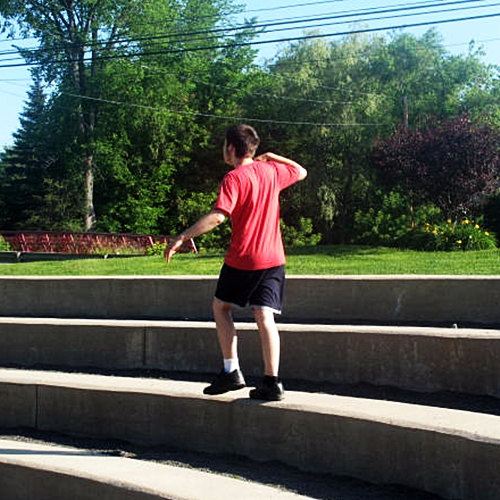
No autism commentary this morning. Great weather and we headed out for a walk on the trail to the Superstore to pick up a few groceries. More than the weather though Conor was in a great mood and wanted to get out doors and stretch his legs in the fresh air. Now 15 and 6 feet tall Conor is still our Run, Jump, Fly boy, on the trail, at the wetland observation deck and at the outdoor Lawrence Amphitheatre, called the Circle Place in our house. It has been a perfect Conor Summer Morning.

Posted in , |

Confirmation DSM-5's New Autism Spectrum Disorder Will Exclude Intellectually Disabled


I have written previously that persons who presently have autistic disorder or PDD-NOS and who are also intellectually disabled will be removed from the DSM-5's New Autism Spectrum Disorder. Whereas those with intellectual disability once constituted autism's vast majority as described by CDC autism expert Dr. Marshalyn Yeargin-Allsopp the 1994 addition of Asperger's Disorder reduced their numerical weight on the autism spectrum.  With the new DSM-5 wording has intentionally been added to the definition of autism to exclude persons with intellectual disability from autism diagnoses. To be diagnosed with autism a person must meet all 4 criteria, A, B, C and D.  Criteria A requires the presence of "persistent deficits in social communication and social interaction across contexts, not accounted for by general developmental delays."  Now, an email exchange between Lisa Jo Rudy of About.com autism spectrum disorders and Dr. Bryan King of the APA's DSM-5's Neurodevelopmental Work Group confirms that the effect of the DSM's New ASD will be to exclude at least some persons with intellectual disability from an autism spectrum disorder diagnosis:


"My Question for Dr. King

There seems to be a desire to remove people with "Persistent deficits in social communication and social interaction across contexts, not accounted for by general developmental delays" from the ASD category. Does this mean that a child with Mental Retardation (also called Intellectual Delays) no longer qualify for an Autism Spectrum diagnosis? Would that person wind up dually diagnosed with Intellectual Development Disorder and social communication disorder rather than with an ASD diagnosis?


His Response

There is no explicit desire , however, by creating more specificity we believe that people may be given diagnoses that better capture their individual conditions. The qualifier above about general developmental delays ensures that the social communication deficits are more specific, and also potentially allows for earlier diagnosis if appropriate.

Just as typically developing infants and toddlers are able to engage in very rich social communication and interaction across contexts, appropriate to their developmental level, so too most individuals with intellectual delays or disabilities are also able to communicate. On the other hand, significant deficits in social communication in toddlers may suggest the presence of autism. What the criterion above is meant to ensure is that clinicians take into account what is typical in terms of social communication abilities at a given age or developmental level, and not assume, for example, that a lack of social perception in a teenager with intellectual disability not automatically suggest the presence of autism. As is currently the case, some individuals with Down Syndrome may also meet criteria for autism; but most will not."


There may or may not be an "explicit desire  to move anyone in to or out of specific diagnostic groups" but the wording is being added intentionally to achieve a specific result and it is clear that the intended result is that social communication deficits be more specific that is .... not part of social communication deficits arising in cases of general developmental delay.

The DSM-5's New Autism Spectrum Disorder will add more persons on the high functioning Asperger's end of the spectrum and will reduce the numbers at the lower intellectually disabled end of the spectrum. The vast majority of the original autism described by Dr. Marshalyn Yeargin-Allsoop has been given the boot, kicked off the autism spectrum entirely, or nearly entirely.

There will be no Intellectually Disabled allowed on the DSM-5's New Autism Spectrum.

Posted in , , , , , |

Cure Autism? Absolutely!

Autism is a disorder. We need to find a cure, or cures, for autism disorders.

These simple points seem to escape those who perversely find joy in the fact that a child has an autism disorder. Equally irrational is the notion that society need not find a cure, or cures, for the various autism spectrum disorders. Autism, at least in its most severe manifestations, directly harms a person with autism when he or she engages in Self Injurious Behavior.  Autism has also taken the lives of those who wander away from home or place of care as appears so often in the news. Some of us have been very fortunate when our autistic children are returned to us safely. It is impossible for me as the father of a severely autistic 15 year old son to respect the opinions of those who argue against curing autism disorders.  That perspective, as I see it, is irrational at best and perverse at worst.

At Autism, Epilepsy and Self-Injurious Behavior Kim Oakley is a blogger who has previously posted a number of honest, informative Youtube videos showing her son's Self Injurious Behavior.  In the latest comment on her blog   Autistic behaviors, Antipsychotics and Angioedema: Warning she again addresses issues arising from SIB with an emphasis in this article on some medication side effects. Her son's SIB is described:

"Late June, 2011. My severely-autistic, non-verbal son had been smashing self in face and head for 3 days, despite numerous interventions to stop brutal self-injury. Protective gear was in place (karate helmet, Posey Mitts). Temporary restraints were ineffective (during this particular episode, he was so strong, broke out of restraints)."


In  Access to health Casdok of Mother of Shrek  has also written recently on her son's SIB:

"Drowning in a tidal wave. Rapidly repeatedly smashing his head hard onto a solid object trying to cause more pain to block out the pain he is already in - giving himself something to cling onto – to find his way back. This is what it looks like to me. A tidal wave of pain from what though – I don’t know. C needs investigations to rule out health issues. 


His desperate eyes boring into your heart silently screaming for you to help him. But you can’t always.


I wrote about this back in Feb. The words ‘critical ‘crisis’ ‘life threatening’ have all been used and yet C has only yesterday got to see the right Consultant who would prescribe meds and a referral to see a Neurologist. Meds might take yet another week – ‘as we are busy’."

Casdok, as I understand her writings, does not believe that autism should be cured. She is obviously a caring and dedicated mother but I can not pretend to understand how she can fight so hard to help her son deal with serious self injurious behavior on one hand, including seeking  medical treatment, and still oppose curing autism. 

Self injurious behavior and other serious challenges presented by autism are exactly what motivate the many parents of autistic children who do seek cures for their children. I wish Cadok and her son well.  I hope they do get the medical assessment  her son needs.  

For the sake of my own son, and others who are severely affected by autism disorders, I hope that the new trend in research toward understanding all of the possible causes of autism, and the decline of the autism is primarily genetic myth,  will also lead to more effective treatments and some day a cure for autism.

Posted in , , |

NIMH Director Thomas Insel: Study Finding Environmental Role in Autism in Line with Other Recent Observations

"These new findings are in line with other recent observations supporting both environmental and genetic contributions to ASD, with the environmental factors likely prenatal and the genetic factors highly complex and sometimes not inherited" 


NIMH director Thomas R. Insel, M.D. 


The recent twins study led by Dr. Joachim Hallmayer and Neil Risch, Ph.D., has grabbed the attention of the world's media and shaken the "autism is genetic" mindset that has dominated autism research for many years.  The reaction to the study by the autism is primarily genetic research establishment has been quick and fearful. Within just a few days attempts were underway to diminish the study design and the outcomes of the study.  Portraying the study as controversial when it is anything but is the most obvious sign of desperation by the autism is genetic establishment. 

Such efforts should be taken with a huge grain of salt and the words of Dr. Insel remembered: the autism twins study results are "in line with other recent observations supporting both environmental and genetic contributions to ASD, with the environmental factors likely prenatal and the genetic factors highly complex and sometimes not inherited."

Posted in , , , , , |

Autism Genetic Myth DEBUNKED!


Our understanding of autism has been impaired for over a decade by the myth that autism is primarily genetic, a myth that has now been debunked as set out in the accompanying news release from the University of California. The WOO  peddled by the "it's gotta be genetic" autism crowd is now, finally, losing ground:


Study debunks autism as primarily genetic disorder

Date: 2011-07-05
Contact: Kristen Bole
Phone: (415) 502-6397
Email: kristen.bole@ucsf.edu
Neil Risch
Neil Risch 
SAN FRANCISCO — A rigorous study of nearly 400 twins has shown that environmental factors have been underestimated, and genetics overestimated, for their roles in autism spectrum disorders.

The study found that the children’s environment represents more than half of the susceptibility — 55 percent in the most severe form of autism and 58 percent in the broad spectrum of the disorder — while genetics is involved in 37 percent and 38 percent of the risk, respectively.

This is the largest and most rigorous twin study to date to research the genetic component of the disorder, and tapped expertise from the UCSF Institute for Human Genetics and Stanford University — which jointly led the research — as well as from Kaiser Permanente, UC Davis, the Autism Genetic Research Exchange and the California Department of Public Health.

“Autism had been thought to be the most heritable of all neurodevelopmental disorders, with a few small twin studies suggesting a 90 percent link,” said UCSF geneticist Neil Risch, director of the UCSF Institute for Human Genetics and senior author of the paper. “It turns out the genetic component still plays an important role, but in our study, it was overshadowed by the environmental factors shared by twins.”

Findings appear in the July 2011 issue of the Archives of General Psychiatry and can be found online at http://archpsyc.ama-assn.org/.

“Our work suggests that the role of environmental factors has been underestimated,” said Dr. Joachim Hallmayer, first author of the paper and an associate professor of psychiatry and behavioral sciences at Stanford University.
What exactly those environmental factors are, Hallmayer said, is the “multimillion dollar question,” but he noted that the disorder’s manifestation in very young children indicates a cause early in life and possibly during pregnancy.

Autism spectrum disorder (ASD) is a range of complex neurodevelopmental disorders characterized by social impairments, communication difficulties and restricted, repetitive, and stereotyped patterns of behavior, according to the National Institute of Mental Health. An estimated six children out of every 1,000 — or one in 166 — have some form of autism, with boys four times more likely than girls to have it. That rate is roughly 10 times the prevalence of the disorder in the 1960s, which has spurred a concerted effort to identify the source of the condition.

The twin study compared those records with California birth certificates for children born between 1987 and 2004, and identified 2,312 twins in which at least one member was affected with some form of autism.  The children were all at least 4 years old, when autism can be reliably diagnosed. Risch and Hallmayer collaborated with autism expert Lisa Croen at Kaiser Permanente and epidemiologist Judith Grether at the California Department of Public Health, which tracks autism statewide through records from the Department of Developmental Services. Hallmayer then worked with UC Davis clinical psychologist Sally Ozonoff and the Southern California-based Autism Genetic Research Exchange to conduct parent interviews and full medical and behavioral evaluations of each child, to systematically assess whether the children had autism spectrum disorder, and if so, at what level of severity.

The initial results were staggering: A boy with a fraternal (not identical) twin with autism spectrum disorder had a 31 percent chance of also having the disorder, while a boy with an identical twin with the disorder had a 77 percent chance of sharing it. In girls, the concordance was 50 percent in identical twins and 36 percent for fraternal pairs. Ultimately, the group was winnowed to 192 pairs of twins, of which 54 were identical and 138 fraternal, for statistical analysis. Since autism disproportionately affects boys, only 80 of the pairs included both sexes.

Both rates are dramatically higher than the general population, in which the overall incidence of autism is about 0.6 percent. The high fraternal rate was especially unexpected, Risch said, because fraternal twins had previously been thought to have the same concordance as non-twin siblings. Identical twins share all of their genetic material, while fraternal twins share only half, the same as any siblings. The strong fraternal-twin rate in this study is considerably higher than non-twin siblings, indicating a strong environmental component unique to twins.

“The difference between the identical and fraternal rates shows that genetics definitely plays a role in the disorder,” Risch said, noting that if it didn’t, the concordance rates would be equal among the identical and fraternal groups. “But the fact that the fraternal twins have such a high rate shows that their shared environment is contributing significantly to their susceptibility.”

Croen, who is director of the Autism Research Program at Kaiser, said the findings suggest that events during pregnancy should be a focus for future research into the origins of autism.

The research was funded by the National Institute of Mental Health, one of 27 institutes and centers of the National Institutes of Health, and by Autism Speaks.


Additional co-authors from Stanford include Jennifer Phillips, Dr. Linda Lotspeich, Sue Cleveland and Andrea Torres. Co-authors from Autism Genetic Resource Exchange include Brianne Cohen, Tiffany Torigoe, Angie Fedele, Janet Miller and Clara Lajonchere. Additional co-authors Jack Collins and Karen Smith are from the California Department of Public Health.

UCSF is a leading university dedicated to promoting health worldwide through advanced biomedical research, graduate-level education in the life sciences and health professions, and excellence in patient care. For more information, visit www.ucsf.edu.

Posted in , , , , |

Search

Swedish Greys - a WordPress theme from Nordic Themepark. Converted by LiteThemes.com.