You Can Help the Chalmers Hospital ICU Save Lives!


The Intensive Care Unit (ICU) at Fredericton's Chalmers hospital saves lives even with vitally important monitoring equipment that is more than 10 years old.  We found out first hand how important the ICU is when our son Conor spent 6 days at the ICU with a life threatening adverse medication reaction:


Conor during his 6 day stay in the ICU


Conor, in full recovery mode, 3 months after leaving the Chalmers ICU

I understand that the Chalmers Foundation hopes to meet their target for purchasing the new monitoring equipment by the end of August.  

If you are interested in helping the ICU save lives visit the Chalmers Foundation current project page - ICU Making a Difference and contribute towards purchasing new monitoring equipment for the ICU.  

Posted in , , , |

Autism Breakthrough? Autism Speaks Recognizes Autism Heterogeneity!


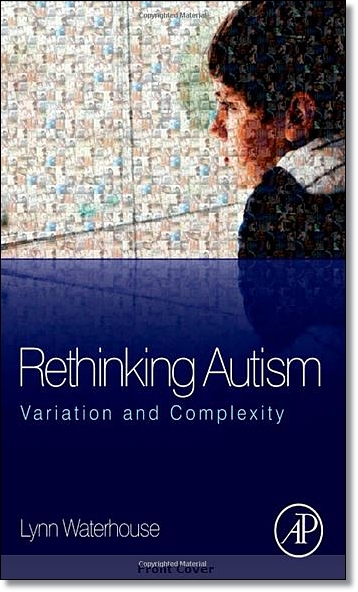
Rethinking Autism Variation and Complexity by Lynn Waterhouse is a recent work which provides a thorough, expert and extremely well researched picture of the variation and complexity of  autism spectrum disorders.

Hopefully the rest of the professional and academic autism community will read Rethinking Autism and come to grips with autism variation, complexity and heterogeneity. The highly influential autism advocacy corporation Autism Speaks has typically done a poor job of representing the heterogeneity of the autism spectrum of disorders. AS has aggressively promoted the careers of John E Robison and Alex Plank two very, very high functioning persons with Aspergers/Autism Spectrum Disorders.  At the same time Autism Speaks has also obscured the existence of the 40% of persons estimated to have autism and an intellectual disability and the large number of persons with autism who also suffer from epileptic seizures.


In what may be a major breakthrough for Autism Speaks, in the post Geraldine Dawson era, and a possible step forward in public understanding of autism disorders a high ranking Autism Speaks official, Michael Rosanoff, Autism Speaks associate director for public health research and scientific review, has acknowledged the heterogeneity of autism spectrum disorders in clear, unambiguous terms, in  a Detroit Free Press article Brain changes of autism may begin in the womb:

"Rather than one disease, autism is now regarded as a collection of conditions with similar traits but different causes, Rosanoff says. People on the autism spectrum are extremely diverse. Some are non-verbal and profoundly disabled; others have successful careers, particularly in science and technology, describing themselves as different, rather than disabled. "Autism is so heterogeneous," Rosanoff says. "We're never going to get to the one cause.""

For anyone else, including other Autism Speaks officials who want to catch up to Mr. Rosanoff in understanding autism disorders, autism researchers and major media columnists interested in a thorough, scholarly view of autism spectrum disorders I strongly recommend Rethinking Autism: Variation and Complexity by Lynn Waterhouse. 

Posted in , , , , , , , , |

OTARC Panel: Dr. Giacomo Vivanti: Does Severe Autism Cause Intellectual Disability?

Excellent panel discussion by the La Trobe University Olga Tennison Autism Research Centre (OTARC) with Dr. Giacomo Vivanti, Dr. Cheryl Dissanjake and Dr. Cynthia Zierhut.  The panel comments on the cultural representation of autism as genius in movies such as Rain Man and television series such as the Big Bang theory. Dr. Vivanti talks about autism research tendency to focus on high functioning autism perceived by many autism researchers to constitute "pure" autism research.  He calls this bias into question as non evidence based,  circular reasoning. There is no legitimate basis to separate autism and intellectual disability as "comorbidity".  

Dr. Vivanti's recent paper, Intellectual development in autism spectrum disorders: new insights from longitudinal studies,  has looked at the possibility that severe autism itself causes intellectual disability an hypothesis which itself is controversial.

Posted in , , , , , , , , |

Severe Autism: Autism in the Shadows - Thank You Amy Mackin


"My son’s story is one of hope, not unlike the stories regularly broadcast on television, printed in magazines or making the rounds on YouTube. Yet the autism spectrum is wide and diverse, and many who suffer from severe autism will never reach the level of functioning that my child has achieved. Although these people are also part of the story, we rarely hear their stories."

Amy Mackin, Autism in the Shadows, Washington Post, July 19, 2013

Amy Mackin is a writer and a blogger who writes at www.amymackin.com.  She is also the mother of an autistic child who she describes as high functioning in the Autism in the Shadows opinion piece she wrote for the Washington Post. Although here son is high functioning Ms. Mackin's article is an eloquent, direct and powerful statement about the invisible autistics, those who live at the severe end of the autism spectrum.  As the father of a 17 year old son who lives at the severe end of the autism spectrum I thank Amy MacKin for her concern for those with severe autism, those who are ignored and neglected (with some exceptions) by both the mainstream media AND by  autism research professionals.  Amy Mackin has spoken the truth about severe autism honestly and directly:

"We must see the pain of a parent who watches her child smash his head against a concrete wall, who throws himself on the floor of a store because he simply cannot stand the fluorescent lights another second; the person who starts violently screaming because the crowd getting off the subway terrifies him. We must feel the anguish of compassionate caregivers when everyone around is staring at their loved one with horror and judgment. We must comprehend the grief of parents who are forced to acknowledge that their children may never be able to care for themselves, and we should consider all the future decisions and worry that realization encompasses.

Many personal stories about autism make us smile and renew our faith in humanity. But some stories will make us cry. They should, because autism can also be terrifying and hopeless. This side of the spectrum still lurks mostly in the shadows. But to fully understand why we search so exhaustively for answers and doggedly seek a cure, these stories must be seen and heard, too."

Thank you Amy Mackin. 

Posted in , , , , |

Conor Countdown Continues In Support of FLEXIBLE, EVIDENCE BASED Inclusion


The Conor Countdown continues, as Conor gets up each day at 6 am and changes the number reflecting the number of days until school resumes.

My son Conor, and his autism disorder disability,  have been well accommodated in schools here in Fredericton, New Brunswick, Canada.  He has benefited both from the assistance of education aides and resource teachers trained in the UNB-CEL Autism program and by placement, at our request, outside the regular classroom for his ABA based instruction.

 His placement is not segregation in the sense of the racial segregation which once prevailed in the American south.  His placement reflects the fact that Conor's autism based sensory sensitivities and need for predictable routine, coupled with his individualized learning style and instruction methods require a quieter learning environment. 

In the regular classroom, early in Conor's education,  he bit his hands every single day until he was removed to a quieter location where the self injurious biting ceased. Now in high school his individualized instruction continues but he has many, many opportunities for socialization at the Leo Hayes High School Resource Centre with other students with special needs, in common areas and activities like school outings, visits to the cafeteria and ... Conor's favorite by far ... in weekly visits to the Nashwaaksis Middle School swimming pool. 

Conor loves his flexible, evidence based schooling so much that the summer, with no school, is a difficult time for him.  We do our best to help him during this period and Conor does his best to help himself.  One of the activities that helps him get through the summer break is the "Countdown".  Each day, every day, at 6 am Conor gets up and changes the number on his board under the question "How Many Days Until School?"  He can see the number getting smaller each day, he can take steps each day to make the number smaller reducing his anxiety and frustration.

Conor's self injurious biting while placed in the regular classroom was a vote against the extreme, non evidence based "regular classroom for all students" philosophy. Now, during the school year Conor packs his lunch bag every night and puts it in front of the side door to the driveway and Dad's car. During the summer Conor does his "How many days until School" countdown.  Both activities are strong compelling statements from Conor in support of the flexible, evidence based, inclusive education he has received at school since being removed from the regular classroom.

Posted in , , , , , , , , , |


 Reward Chart

Before dinner, we review exactly what behavior is expected, using utensils not our hands to put the food only in our mouths (not on the floor or somewhere else), sitting on the chair (not standing on the chair and not running around the dinning room) and using polite words such as please and thank-you (no yelling, whining or rude talking). If I have to give more than three reminders, they do not get a sticker. I never remove a sticker from the chart because it is only used for positive reinforcement not punishment.  Throughout dinner, I give as many compliments as possible to remind the children to stay on task. The Behavior Management Package, available on the left hand side of the screen, has pre-made behavior charts to make things easier for you, since your life is hard enough.
15 stickers = Restaurant trip
Good sitting
Good Eating
Good Manners
 

Am I to blame for my child'a autism?


 Should I blame myself for my child's Autism?
I work with children with Autism but I also work with their parents to help them help their children. Once a parent becomes comfortable with me, this question always comes up...Am I to blame for my child's autism? I had one parent confess to me that during her pregnancy with her autistic son she considered having an abortion because she was not ready to have another baby. She is so haunted with guilt by this thought, that she believes her son's autism is a punishment for this thought. I have worked with another mother of a child with autism who goes to grief therapy with her husband to mourn the loss of the son they anticipated. Some mother's go over in their minds everything they may have eaten during their pregnancy or anything they may have come in contact with that may have caused this disorder. Some parents reveal to me that they have various relatives with mental disorders, social oddities or speech delays and they wish they would have realized their might be a genetic disposition in their family to Autism.  Then there are things that plague them about their parenting once the child was born, since he seemed typical at first but then became delayed. Was it a vaccine that caused it? Was it an illness or an injury that could have been prevented. They lie awake at night trying not to blame themselves for their child's problems, wondering if someday their child can have friends or at least conversations with their own family.
There is nothing I can offer in way of whom to blame for these distraught parents. There is nothing conclusive about vaccinations causing Autism or environmental factors, or even genetic links. All I can encourage is for parents to accept that their child is unique and love them for that uniqueness. A child with autism can bring things to your life that no typical child can. You find yourself tapping into creativity that you never knew existed in yourself when you are exploring ways to relate and communicate with your child. When you take a few minutes and put yourself in your child's world and try to understand why they call things the weird things they call them and you find yourself speaking not French or German or Spanish but "Johnny" (or whatever your child may be named). It always makes me feel proud when I can have conversations with children then realize someone from outside of their world is listening in and they ask me puzzled, "How on Earth do you know what he is talking about?!" I can smile and explain that we have a special connection.
If you feel frustrated with the things that your child can not do and find yourself agonizing over the obstacles your child is facing or will face in the future, you need to take sometime and think about all the things your child has accomplished and what is special about them. I like to keep a notebook with my clients in which I write only positive things about the child, so when they are having a hard time they can page through it and smile about the good things. Some notes are as small and quick as "Today, Johnny said Girl is brooming, when he saw a picture of a girl sweeping." This is a great antecdote for this child because it is rare that he comments on anything independently. Other notes are long and describe successful social interactions such as eye contact or a smile, or a time when another child went out of his way to include Johnny in their play.

Search

Swedish Greys - a WordPress theme from Nordic Themepark. Converted by LiteThemes.com.